

Canned tomatoes are one of the most essential pantry staples in kitchens around the world. Whether you’re cooking a comforting pasta dish, a rich stew, or a quick weekday meal, canned tomatoes offer convenience, consistency, and flavor all year round. But if you’ve ever stood in the grocery aisle wondering which type to choose—whole, diced, crushed, or paste—you’re not alone.
Each variety of canned tomato has its own texture, flavor intensity, and ideal culinary use. Understanding these differences can completely transform your cooking, helping you achieve better flavor, texture, and overall results in your dishes.
In this guide, we’ll explore what goes into a can of tomatoes and break down the seven most common types of canned tomatoes—plus exactly how to use each one.
What’s Actually Inside a Can of Tomatoes?
Before diving into the different types, it’s important to understand how canned tomatoes are made.
Most canned tomatoes begin with ripe, freshly harvested tomatoes—typically plum tomatoes, which are known for their firm flesh, fewer seeds, and rich flavor. These tomatoes are processed shortly after harvesting to preserve their peak taste and vibrant color.
The first step is peeling. There are two main methods used:
· Lye peeling, which involves a chemical solution that loosens the skin quickly and efficiently
· Steam peeling, a more natural process that uses high-pressure steam
Many premium and organic brands prefer steam peeling, and in fact, tomatoes labeled as organic must be steam-peeled.
After peeling, tomatoes are packed into cans with either juice or purée. Some may include additional ingredients such as:
· Citric acid – to maintain acidity and preserve freshness
· Calcium chloride – to help tomatoes retain their shape
· Salt, herbs, or spices – depending on the product
From there, the tomatoes are sealed and heat-processed to ensure safety and shelf stability.
Now, let’s explore the different types you’ll encounter.
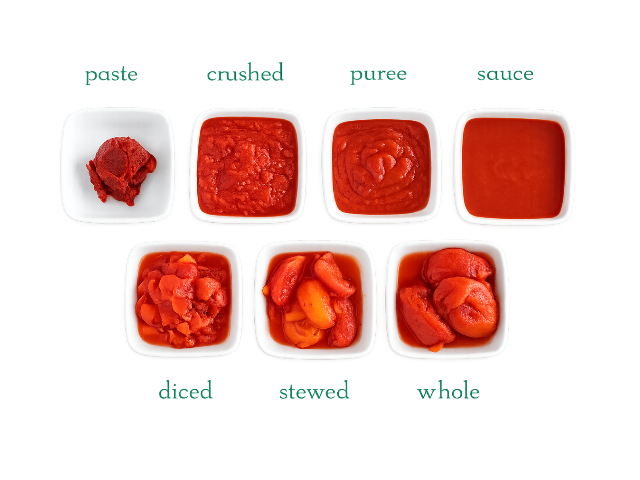
1. Whole Peeled Tomatoes: The Ultimate All-Rounder
Whole peeled tomatoes are widely considered the most versatile form of canned tomatoes. Packed in either tomato juice or purée, they maintain their natural structure and flavor better than most other varieties.
What makes them so useful is their flexibility. You can crush them by hand, blend them into a sauce, or cook them down into a rich base. This means one can easily adapt to multiple recipes.
They are especially ideal for slow-cooked dishes where tomatoes need time to break down and develop deep flavor. Think of classic recipes like homemade tomato sauce, hearty soups, or braised dishes.
If you enjoy cooking from scratch and want full control over texture, whole peeled tomatoes are your best choice.
2. Diced Tomatoes: Perfect for Texture and Bite
Diced tomatoes are cut into small, uniform cubes before being canned. Unlike whole tomatoes, they are treated with calcium chloride, which helps them hold their shape even during cooking.
Interestingly, this means diced tomatoes actually break down more slowly than other forms. While you might expect smaller pieces to soften quickly, they remain firm, making them ideal for recipes where you want visible tomato chunks.
These tomatoes are excellent for dishes that benefit from texture, such as chili, tacos, or chunky soups. They’re also a great option for quick meals because they don’t require additional preparation.
If you like your dishes to have a bit of bite and structure, diced tomatoes are the way to go.
3. Crushed Tomatoes: The Perfect Balance
Crushed tomatoes sit somewhere between whole and puréed tomatoes. They are partially broken down and combined with tomato juice or purée, resulting in a thick, slightly chunky consistency.
This balance makes them incredibly convenient. You get a ready-to-use texture without sacrificing too much freshness or body.
Crushed tomatoes are ideal for recipes that require a rich, hearty sauce without being overly smooth. They work beautifully in pasta dishes like lasagna or marinara, as well as in soups and casseroles.
If you’re looking for a versatile, time-saving option that still delivers great flavor, crushed tomatoes are a strong choice.
4. Stewed Tomatoes: Pre-Seasoned and Ready to Use
Stewed tomatoes are cooked before canning and typically include added ingredients such as sugar, onions, celery, and spices. This gives them a softer texture and a slightly sweet, seasoned flavor.
Because they are already flavored, stewed tomatoes are less commonly used in general recipes. Their taste can vary significantly between brands, making them less predictable in cooking.
However, they can be very convenient when you want to add instant flavor to a dish without extra seasoning. They’re often used in comfort foods, casseroles, or rustic dishes where a slightly sweet tomato profile is desirable.
If you’re short on time and want a ready-made flavor boost, stewed tomatoes can be a helpful option.
5. Tomato Purée: Smooth and Thick
Tomato purée is made by cooking and straining tomatoes into a smooth, thick liquid. It has a consistency similar to crushed tomatoes but is more refined and uniform.
This makes it a great shortcut for sauces and soups that require a smooth texture. However, despite its processed consistency, tomato purée still benefits from extended cooking to deepen its flavor.
It works well as a base for tomato soup, enchilada sauce, or simmered dishes where you want a consistent texture without chunks.
Keep in mind that some purées can be slightly watery, so reducing them during cooking helps achieve a richer result.
6. Tomato Sauce: A Simple Base, Not a Finished Product
Canned tomato sauce is often misunderstood. Unlike pasta sauce, it is not fully seasoned or ready to eat. Instead, it is a smooth, lightly cooked tomato product with a balanced flavor.
It is thinner than purée but more concentrated than basic tomato juice. Some manufacturers create it by diluting tomato paste with water.
Because it has a mild and neutral profile, tomato sauce is an excellent foundation for building your own recipes. You can easily customize it with herbs, spices, and other ingredients.
Use it as a base for pizza sauce, barbecue sauce, or baked dishes. It’s also great for recipes where you want a smooth texture without too much thickness.
7. Tomato Paste: Intense Flavor in Small Amounts
Tomato paste is the most concentrated form of canned tomatoes. It is made by cooking tomatoes for a long time until most of the moisture evaporates, leaving a thick, deep red paste.
This process intensifies the natural sweetness and umami of the tomatoes, making it a powerful ingredient even in small quantities.
Tomato paste is often used at the beginning of cooking. When sautéed with oil, onions, and garlic, it caramelizes slightly, creating a rich base that enhances the overall flavor of a dish.
It’s commonly used in soups, stews, sauces, and braised dishes. It also acts as a natural thickener, improving both texture and depth.
A small spoonful can make a big difference, which is why tomato paste is considered a must-have in any kitchen.
How to Choose the Right Type for Your Recipe
Choosing the right canned tomato depends on what you want to achieve in your dish:
· For maximum flexibility, go with whole peeled tomatoes
· For chunky texture, choose diced tomatoes
· For balanced sauces, use crushed tomatoes
· For quick flavor, try stewed tomatoes
· For smooth consistency, pick tomato purée or sauce
· For intense flavor, rely on tomato paste
Understanding these differences allows you to cook more efficiently and achieve better results every time.
Final Thoughts
Canned tomatoes are far more than just a convenient substitute for fresh produce—they are a versatile, reliable ingredient that can elevate countless dishes. From the rich depth of tomato paste to the bright freshness of whole peeled tomatoes, each type serves a unique purpose in the kitchen.
By learning how to use each variety properly, you can expand your cooking skills, reduce preparation time, and create meals with more consistent and satisfying results.
So next time you reach for a can of tomatoes, you’ll know exactly which one to choose—and how to make the most of it.