

This Wednesday, our company's afternoon tea featured a homemade treat that's been lighting up streets across China this winter: Warm Black Rice on Ice Cream, better known as 热奶宝 (rè nài bǎo). If you've been scrolling through social media lately, you've probably seen this viral sensation—it's the ultimate winter street dessert, blending the comforting warmth of sticky rice with the cool creaminess of whipped topping, all served in an ice cream cone for that perfect hot-and-cold contrast.
What makes 热奶宝 so addictive? It's the genius contrast: hot, glutinous black rice (or a mix of black and white glutinous rice) piled into a crisp waffle cone, then topped with a generous swirl of whipped cream that slowly melts into the warm rice below. The result is "糯叽叽" (nuò jī jī)—chewy, gooey, and melt-in-your-mouth—paired with creamy sweetness and a subtle nutty aroma from the black rice. In the chilly winter air, it satisfies that ice cream craving without the post-dessert shiver. No wonder it's exploded in popularity, with lines forming at street stalls and people DIY-ing versions at home or in offices.

The Origins and Rise to Fame
热奶宝 traces its roots to Henan province, particularly street vendors in places like Xinxiang, where it started as a simple kid-friendly snack: warm sticky rice stuffed into an ice cream cone and topped with sweet cream. It was a clever way to give children a "hot ice cream" treat in colder months. But in late 2022, short videos on platforms like Douyin (TikTok's Chinese version) and Xiaohongshu turned it into a nationwide phenomenon. Suddenly, everyone was talking about this "winter version of ice cream" or "hot ice cream." Topics racked up billions of views, spawning creative variations and even office afternoon tea trends—just like what we did this week!
By now, it's a staple winter street food in cities from north to south. Vendors experiment endlessly: classic plain, Oreo-crumbled, matcha-dusted, meat floss-sprinkled, red bean, taro paste, or even "full deluxe" versions loaded with every topping imaginable. Prices stay affordable—usually 5-10 yuan (about $0.70-1.40 USD)—making it accessible for students, office workers, and anyone craving a quick warm-up. It's especially huge around campuses and night markets, where the aroma draws crowds like roasted chestnuts or sweet potatoes do in winter.
What sets it apart from other Chinese winter sweets? Think tanghulu (candied hawthorn skewers) for crunch and tartness, or hot red bean soup for cozy comfort. 热奶宝 wins with its playful ice cream mimicry—visually identical to a soft-serve cone but steaming hot. It's the ultimate comfort food for cold days: nostalgic yet trendy, simple yet indulgent.
Why Black Rice? The Star Ingredient
The heart of 热奶宝 is the rice—often a blend for the best texture and flavor. Black rice (also called forbidden rice or purple rice) brings a deep, nutty taste, subtle sweetness, and that striking dark color. It's packed with antioxidants, fiber, and a slightly chewy bite when cooked properly. Many recipes mix it with white glutinous rice (sticky rice) to boost the gooey factor.
In our office version, we followed a straightforward homemade approach inspired by popular tutorials:
· Ingredients for the rice (serves about 10-15 cones):
o 3/4 cup black rice
o 1/2 cup white glutinous rice (sweet rice)
o 2 cups water (adjust for desired softness)
o Optional: a pinch of salt or a splash of milk for creaminess
· Other essentials:
o Ice cream cones (waffle cones work best for sturdiness)
o Heavy whipping cream (animal-based for best stability; about 1-2 cups, sweetened with powdered sugar or condensed milk to taste)
o Toppings: crushed Oreos, chocolate shavings, nuts, fruit bits, matcha powder—whatever your team fancies!
How to Make It at Home (Step-by-Step)
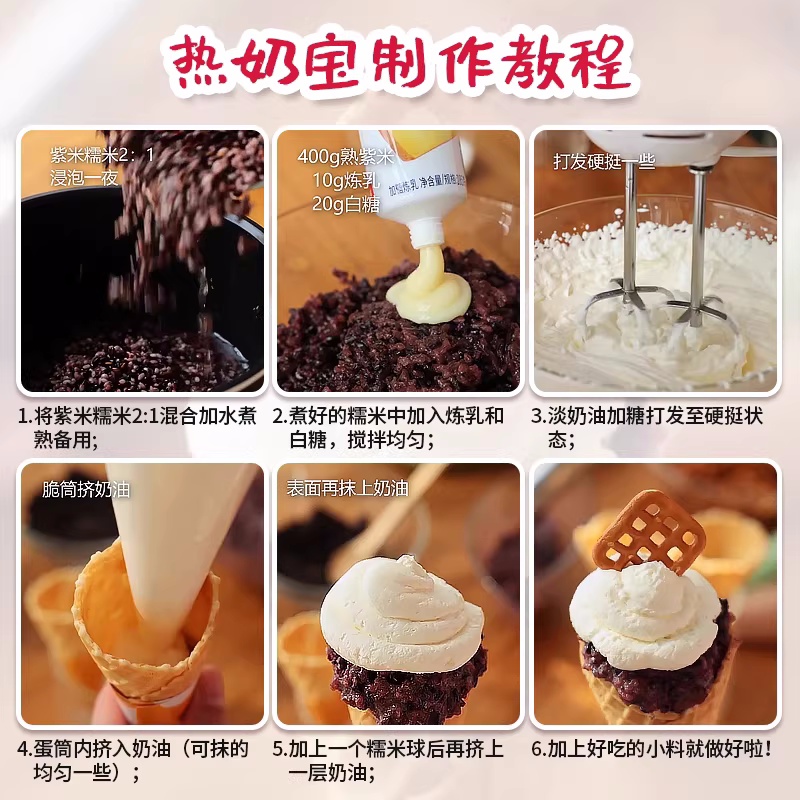
Making 热奶宝 is surprisingly easy—no fancy equipment needed beyond a pot and a hand mixer. Here's our office recipe, scaled for a group:
1. Cook the rice: Rinse the black and white rice together until the water runs clear. Combine with 2 cups water in a pot or rice cooker. Bring to a boil, then simmer on low for 30-40 minutes, stirring occasionally. The goal is soft, sticky rice that's moist but not soupy—think porridge-like. Add a bit more water if it dries out. For extra flavor, some add condensed milk or sugar during cooking.
2. Prepare the whipped cream: While the rice cooks, chill your mixing bowl and beaters. Whip the heavy cream with 2-3 tablespoons powdered sugar (or to taste) until stiff peaks form. For a richer version, fold in a bit of condensed milk or vanilla. Keep it chilled until assembly.
3. Assemble: Warm the rice slightly if needed (it should be hot but not scorching). Scoop a generous portion into the cone—press gently to fill the base. Swirl a big dollop of whipped cream on top using a spoon or piping bag for that classic ice cream look.
4. Customize and serve: Sprinkle toppings immediately so they stick. Eat right away while the contrast is at its best—the cream melts into the rice, creating a creamy, chewy harmony.
We tried variations: plain for purists, Oreo-crushed for chocolate lovers, and even a matcha-dusted one. The office favorite? The classic with a hint of extra condensed milk in the rice—pure comfort!
Health Angle and Why It's Trending Now
Black rice isn't just tasty; it's nutritious. Rich in anthocyanins (the same antioxidants in blueberries), it supports heart health and has anti-inflammatory benefits. Paired with moderate whipped cream, it's indulgent but not overly heavy—perfect for winter when we crave warmth without guilt.
In 2025-2026, with social media still driving food trends, 热奶宝 remains a winter staple. It's evolved beyond streets into cafes, milk tea shops, and home kitchens. People love the ritual: queuing in the cold, customizing toppings, snapping photos, and sharing the joy. It's more than dessert—it's a mood booster, a shared experience in chilly times.
Final Thoughts
This Wednesday's afternoon tea reminded us why 热奶宝 captivates so many: it's innovative yet rooted in tradition, simple to make yet endlessly customizable, and perfectly timed for winter cravings. Whether from a bustling street cart in Nanjing or homemade in a Singapore office, it delivers that magical hot-cold bite every time.
If you're in China this winter, hunt one down—join the lines and savor the hype. Or try making it yourself; with just rice, cream, and cones, you'll have a crowd-pleaser. What's your favorite topping? Drop a comment—I'd love to hear!