

Dear Amoytop Foods Team and Valued Partners,
As the gentle spring breeze carries the fragrance of blooming flowers and fresh green leaves, we approach one of China's most cherished traditional festivals — the Qingming Festival, also widely known as Tomb-Sweeping Day or the Pure Brightness Festival. This year, Qingming falls on April 5, 2026, marking a time of remembrance, renewal, and connection with both our ancestors and the vibrant beauty of nature.
At Amoytop Foods, a company dedicated to bringing high-quality canned foods — including canned vegetables, fruits, seafood, and edible fungi — from the rich lands of China to tables around the world, we deeply value cultural traditions that foster family bonds, respect for heritage, and work-life harmony. In observance of this meaningful festival, we are pleased to announce a 3-day holiday from Saturday, April 4th to Monday, April 6th, 2026. Our office and operations will be closed during this period, and we will resume normal business activities on Tuesday, April 7th, 2026.
We encourage all team members to use this time to reconnect with family, honor ancestors, and recharge amidst the refreshing spring season. Please make necessary arrangements for any ongoing projects, client communications, or urgent matters before the holiday begins. For any emergencies during the break, please contact the designated on-call personnel as communicated separately.
The Rich History and Origin of the Qingming Festival
The Qingming Festival boasts a history spanning over 2,500 years, tracing its roots back to the Zhou Dynasty (1046–256 BCE). It is one of the 24 solar terms in the traditional Chinese lunar calendar, occurring on the 15th day after the Spring Equinox. The name "Qingming" literally translates to "Clear and Bright," symbolizing the pure, bright skies and the awakening of nature after the cold winter months. This solar term signifies the perfect time for planting crops and enjoying the rejuvenation of the earth.
One of the most touching legends associated with Qingming originates from the Cold Food Festival (Hanshi Festival) during the Spring and Autumn Period. The story revolves around Jie Zitui, a loyal official who served Prince Chong'er of the State of Jin (modern-day Shanxi). When the prince was in exile and facing starvation, Jie Zitui famously cut a piece of flesh from his own thigh to make soup, saving his lord's life. Years later, when Chong'er became the Duke of Jin, he sought to reward Jie Zitui, who had retreated to the mountains with his mother to live a simple life. In an attempt to force Jie out of hiding, the duke ordered the mountains to be set on fire. Tragically, Jie Zitui and his mother perished in the flames. Overwhelmed with regret, the duke declared that no fire should be lit on the anniversary of Jie's death, leading to the tradition of eating cold food. Over time, the Cold Food Festival merged with Qingming, evolving into a day not only for remembrance but also for honoring loyalty, sacrifice, and familial piety.
During the Tang Dynasty (618–907 CE), Emperor Xuanzong officially recognized Qingming as a holiday, encouraging people to pay respects to their ancestors. This practice is deeply rooted in Confucian values, which emphasize filial piety (xiao), respect for elders, and the continuity of family lineage. Today, Qingming remains one of the most important festivals for Chinese communities worldwide, including in Taiwan, Singapore, Malaysia, and among the global Chinese diaspora.
Traditional Customs and Practices
The core of Qingming revolves around two intertwined themes: solemn remembrance of the departed and joyful celebration of spring's arrival. Families across China and beyond participate in several key customs:
1. Tomb Sweeping (Sao Mu): This is the most iconic activity. Families visit ancestral gravesites to clean the tombs — removing weeds, clearing debris, and adding fresh soil to the mounds. They may plant flowers, willow branches, or even artificial plants as symbols of life and renewal. Offerings such as food, tea, wine, incense, and joss paper (representing money for the afterlife) are presented to honor the spirits of ancestors. This act expresses gratitude for the sacrifices of previous generations and seeks their blessings for the living.
2. Ancestor Worship and Offerings: Beyond physical cleaning, people burn incense and joss paper while reciting prayers. In some regions, entire families gather for elaborate ceremonies, sharing stories of their forebears to pass down family history to younger generations.
3. Spring Outings (Ta Qing): Qingming is not only solemn but also festive. The "Clear and Bright" weather makes it ideal for outdoor activities. People enjoy "ta qing" — hiking in the countryside, appreciating blooming flowers (such as peach blossoms and willows), flying kites, and picnicking. This practice balances mourning with appreciation for life's vitality, reminding us that death and rebirth are part of the natural cycle.
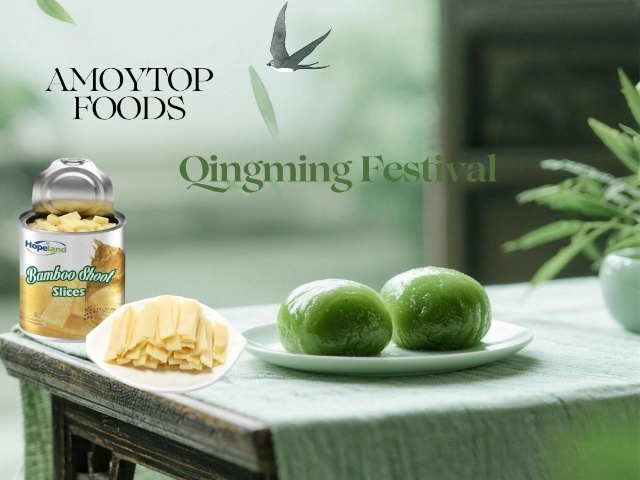
4. Traditional Foods: Special dishes mark the festival. One famous item is qingtuan (green rice balls or dumplings), made from glutinous rice flour mixed with mugwort or barley grass, giving them a distinctive green color and fragrant herbal taste. Other regional foods include cold dishes from the Hanshi tradition, crispy cakes, zongzi (sticky rice dumplings), and various spring vegetables. At Amoytop Foods, we take pride in preserving the essence of such natural ingredients through our high-quality canned products, allowing families to enjoy wholesome flavors year-round.
In modern times, customs have adapted to urban lifestyles. Many people now use online memorial platforms or virtual tomb-sweeping services, while others combine traditions with eco-friendly practices, such as planting trees instead of burning excessive paper offerings to reduce environmental impact.
Cultural Significance and Poetic Reflections
Qingming embodies profound philosophical ideas: respect for the past, harmony with nature, and hope for the future. It teaches us the importance of filial piety, gratitude, and mindfulness. The festival reminds us that while life is fleeting, the bonds of family and the legacy we leave endure.
One of the most famous poems capturing the spirit of Qingming is "Qingming" by Du Mu, a Tang Dynasty poet:
清明时节雨纷纷, 路上行人欲断魂。 借问酒家何处有? 牧童遥指杏花村。
(English Translation: During the Qingming Festival, the rain falls gently and continuously, Travelers on the road feel their spirits broken with sorrow. I ask where I can find a wine tavern, The shepherd boy points to a distant village amid apricot blossoms.)
This poem beautifully blends melancholy with the serene beauty of spring rain and blooming flowers, reflecting the dual emotions of remembrance and renewal.
Another perspective comes from the broader Chinese philosophy: Qingming aligns with the yin-yang balance — mourning the past (yin) while embracing growth and vitality (yang). In today's fast-paced world, where many work long hours in industries like food export and manufacturing (as we do at Amoytop Foods), this festival offers a precious pause to reflect on what truly matters: health, family, and cultural roots.
Modern Celebrations and Personal Reflections
In contemporary society, Qingming has evolved while retaining its essence. Families in cities might drive to suburban cemeteries or participate in organized memorial events. Young people often use the holiday for short family trips, combining tomb-sweeping with sightseeing in scenic spots famous for spring scenery, such as the West Lake in Hangzhou or the mountains around Xiamen — our home base.
For companies like Amoytop Foods, which operates with factories in Zhangzhou and Dangshan, supplying canned goods globally under our "HOPELAND" and other brands, the festival reinforces our values of integrity, cooperation, and care. Just as we "do the food with conscience and the enterprise with morality," Qingming encourages us to honor the hard work of past generations that built the foundations for today's prosperity.
During this holiday, we invite our team to:
· Spend quality time with parents and grandparents, sharing meals made with fresh spring ingredients or our convenient canned products.
· Engage in light outdoor activities to refresh body and mind.
· Teach younger family members about our cultural heritage, ensuring traditions live on.
· Reflect on personal and professional goals, returning to work with renewed energy on April 7th.
Safety is paramount: Please drive carefully if traveling, follow local guidelines for cemetery visits, and prioritize environmental responsibility.
Looking Forward with Gratitude
At Amoytop Foods, we are grateful for the dedication of our team, the trust of our partners, and the support of clients who appreciate the quality of Chinese canned foods we export worldwide. This Qingming holiday is a moment to express thanks — to our ancestors for their sacrifices, to nature for its bounty, and to each other for our collective efforts.
We wish you and your families a peaceful, meaningful, and joyful Qingming Festival. May the "Clear and Bright" season bring health, happiness, prosperity, and continued success in all your endeavors. Let us carry the spirit of remembrance and renewal into our daily work, striving for excellence in every can we produce and every relationship we nurture.
Should you have any questions regarding work handovers or holiday arrangements, please reach out to your department leads before April 4th.
Warmest regards and best wishes,
Amoytop Foods Management Team
Xiamen, China