

Everything you need to make the best ketchup of your life – from science to variations, storage to pro secrets
Introduction – Why Homemade Ketchup Is a Game-Changer
Walk down any supermarket aisle and you’ll see dozens of red squeeze bottles promising the “classic taste” you grew up with. Yet open a jar of real homemade ketchup and the difference is immediate: deeper tomato aroma, brighter tang, silkier texture, and none of that slightly metallic aftertaste that comes from industrial processing.
Making ketchup from scratch is not difficult, but it is transformative. In roughly the same time it takes to slow-cook a pot of Sunday ragù, you can produce a condiment that will make every burger, fry, breakfast sandwich, and meatloaf taste exponentially better. And once you have the base technique down, you can spin it into curry ketchup, chipotle ketchup, sriracha ketchup, low-sugar keto ketchup, or even truffle-balsamic ketchup for fancy steak frites.
This guide is the only ketchup article you’ll ever need: a restaurant-tested classic recipe, full science breakdown, troubleshooting, shelf-life tricks, and ten professional variations.
Part 1: Understanding the Soul of Great Ketchup
Great ketchup is built on five pillars:
1. Sweetness – usually sugar, sometimes brown sugar, honey, or molasses
2. Acidity – almost always vinegar, occasionally lemon or citric acid
3. Umami – from tomatoes themselves (glutamates) and sometimes secret boosters
4. Warm spices – clove, cinnamon, allspice, celery seed in tiny amounts
5. Perfect texture – thick enough to mound on a fry, smooth enough to squeeze cleanly
Commercial giants like Heinz achieve consistency by using tomato concentrate, high-fructose corn syrup, and “natural flavourings.” At home we use fresh (or good canned) tomatoes, real spices, and time. The result is more vibrant and far more customisable.
Part 2: Ingredients – What You Really Need
Classic Recipe (makes ≈ 950 ml)
Tomato base
· 1.5 kg very ripe fresh tomatoes (Roma, San Marzano, or any plum variety) OR
· 2 × 800 g cans whole peeled tomatoes (Italian San Marzano if budget allows)
Aromatics
· 1 large onion (180–200 g), finely diced
· 4–5 cloves garlic, minced
· 1 Tbsp neutral oil or light olive oil
Vinegar (choose one)
· 240 ml (1 cup) distilled white vinegar 5 % – classic sharp Heinz-style
· 240 ml apple cider vinegar – softer, fruitier
· 180 ml white + 60 ml balsamic – gourmet restaurant version
Sweetener
· 100–130 g sugar total. My favourite split: 60 g white granulated + 50–70 g light brown for caramel depth
Salt & Spices
· 1½–2 tsp fine sea salt
· 1 tsp sweet paprika (not smoked unless you want BBQ ketchup)
· ½ tsp mustard powder (Colman’s if possible)
· ¼ tsp ground cinnamon
· ¼ tsp ground cloves OR 5 whole cloves in a spice bag
· ¼ tsp celery seeds (the “secret” ingredient in Heinz)
· ⅛ tsp ground allspice OR 4 allspice berries
· Pinch–½ tsp cayenne or red chilli flakes (optional heat)
Optional boosters (highly recommended)
· 1–2 Tbsp double-concentrated tomato paste – richer colour & faster thickening
· 1 tsp Worcestershire sauce or Asian fish sauce – invisible umami rocket fuel
· ½ tsp citric acid powder (dissolved in the vinegar) – brightens without extra liquid
Part 3: Step-by-Step Master Method
1. Prepare the tomatoes Fresh: Bring a large pot of water to a rolling boil. Score a small “X” on the bottom of each tomato. Blanch 30–45 seconds until skins loosen. Transfer immediately to ice water. Peel, core, and roughly chop. Canned: Simply crush by hand in a bowl or give one quick pulse in a blender. Retain juices.
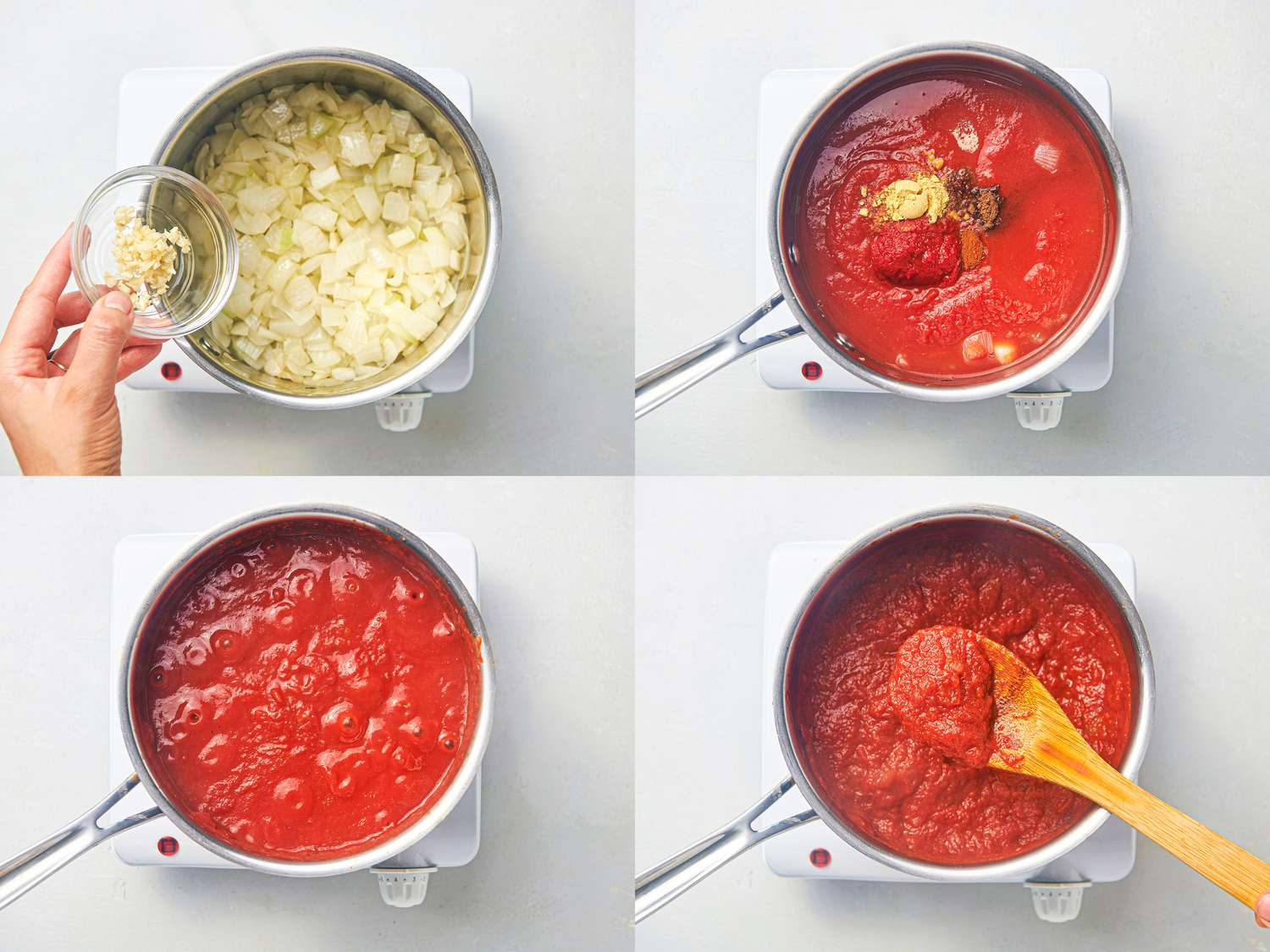
2. Sweat the aromatics (do not skip) Heat the oil in a wide, heavy-bottomed non-reactive pot (stainless steel or enamelled cast iron). Add onion with a pinch of salt and cook over medium heat 7–8 minutes until completely soft and just beginning to colour. Add garlic and cook 60 seconds more until fragrant. This gentle sweating builds sweetness without bitterness.
3. First long simmer – develop flavour and reduce Add tomatoes, all dry spices, salt, and tomato paste if using. If you are using whole spices or celery seeds, tie them in a small piece of cheesecloth or a tea infuser for easy removal later. Bring to a gentle boil, then drop to the lowest simmer. Cook uncovered 45–75 minutes, stirring every 10–15 minutes. You want to reduce the volume by roughly half. The mixture is ready when a spoon dragged across the bottom leaves a clean line for a couple of seconds.
4. Blend to velvet Remove the spice bag if you used one. Use an immersion blender directly in the pot (easiest and safest) or carefully transfer to a countertop blender in batches. Blend until absolutely no chunks remain.
5. Strain – the step that separates amateur from pro Pass the purée through a fine-mesh sieve or chinois, pressing firmly with a ladle or silicone spatula. You’ll be shocked how much skin, seeds, and spice residue is left behind. This is what gives homemade ketchup its signature silky texture.
6. Final seasoning and reduction Return the strained ketchup to the cleaned pot. Stir in the vinegar and sugar (and Worcestershire/fish sauce if using). Bring back to a gentle simmer and cook another 20–40 minutes until it reaches the perfect thickness: it should coat the back of a spoon heavily and hold a clear line when you draw your finger across. Taste repeatedly. Adjust with tiny amounts of sugar, vinegar, or salt until the sweet-tangy balance sings.
7. Bottle safely While piping hot, funnel into sterilised bottles or jars.
· Refrigerator only: Cool completely, cap, and store up to 4 weeks.
· Water-bath canning (for 12+ months shelf life): Leave 1 cm headspace, wipe rims, apply lids, process in boiling water 10 minutes (pints 15 minutes).
· Freezing: Pour into freezer-safe containers or silicone ice-cube trays for individual portions – keeps 6–8 months.
Part 4: The Science – Why This Recipe Works
· Glutamates in ripe tomatoes + slow cooking → massive natural umami
· Maillard reactions during onion/garlic sweating → nutty depth
· Pectin naturally present in tomatoes + long reduction → body without starch
· Vinegar added late → late preserves volatile acetic acid → brighter tang
· Tiny amounts of clove, cinnamon, and allspice → trigger “warm” receptors → psychological roundness
Part 5: Troubleshooting Common Problems
Too thin → Simmer longer uncovered or add ½ tsp apple pectin dissolved in 1 Tbsp hot water. Too thick → Whisk in a tablespoon of hot water at a time until desired consistency. Too sweet → Add 1 tsp vinegar + pinch of salt at a time. Too sour → Add 1 tsp sugar + pinch of salt at a time. Dull colour → Add 1 extra Tbsp tomato paste or roast half the tomatoes first. Separated in jar → Normal if refrigerated; simply shake or stir before use.
Part 6: Ten Professional Variations (add during final simmer)
1. Classic American (Heinz clone) – add ½ tsp onion powder + ½ tsp garlic powder
2. Spicy Sriracha Ketchup – 2 tsp gochujang + 1 tsp smoked paprika
3. Currywurst Ketchup (German street-food style) – 2 tsp mild curry powder + ½ tsp turmeric + pinch cayenne
4. Smoky BBQ Ketchup – 2 Tbsp smoked paprika + 1 Tbsp molasses + 2 tsp liquid smoke + 2 Tbsp molasses
5. Chipotle Ketchup – 2–3 chipotles in adobo + 1 tsp adobo sauce
6. Low-Carb/Keto – 80 g erythritol + 2 Tbsp allulose + extra ½ tsp citric acid
7. Balsamic & Black Garlic – replace 60 ml white vinegar with balsamic + 3 cloves black garlic
8. Roasted Garlic & Rosemary – roast a whole bulb, squeeze in at end + 1 tsp finely chopped rosemary
9. Truffle Ketchup – ½ tsp truffle oil + ¼ tsp white truffle paste at the very end (off heat)
10. Sweet Thai Chilli Ketchup – replace 50 g sugar with palm sugar + 2 Tbsp sambal oelek + 1 tsp fish sauce
Part 7: Storage & Shelf Life Recap
Refrigerator (no canning): 3–4 weeks Properly canned: 12–18 months in cool dark place Frozen: 6–8 months (texture perfect after thawing)
Final Thoughts
Making your own tomato ketchup is one of those kitchen projects that feels like alchemy: a few humble ingredients, some patience, and suddenly you have a condiment that outperforms anything on the supermarket shelf. The first time you squeeze your own bright-red, glossy ketchup onto a plate of golden fries and taste that fresh tomato punch balanced with warm spice and tangy vinegar, you’ll wonder why you ever bought the commercial stuff.
Keep a batch in the fridge, give jars as gifts, or scale the recipe ×5 and can enough to last the year. Either way, you’ve just reclaimed one of the world’s most beloved sauces and made it unmistakably yours.
Now go forth and ketchup!