

Introduction: A Night of Lights and Togetherness
Tonight, the full moon hangs heavy and bright in the sky, casting its silver glow upon streets adorned with thousands of colorful lanterns. Families across China and around the world are coming together to mark the final day of the Lunar New Year celebrations: the Lantern Festival, or Yuanxiao Jie (元宵节) .
As we at Xiamen Amoytop Import & Export Co., Ltd. look out from our head-office in Xiamen, the festive spirit is palpable. The city's parks and temples are aglow with lantern displays, children carry their handmade paper lanterns with pride, and the aroma of sweet glutinous rice balls wafts from kitchens in every neighborhood. This day, which always falls on the first full moon of the new lunar year, is a beautiful symbol of unity, renewal, and the bright hopes we hold for the coming months.
It's a theme that deeply resonates with our company's mission. Since 2009, we've been dedicated to bringing people together through wholesome, high-quality processed foods. With our headquarters in the vibrant coastal city of Xiamen and two holding factories strategically located in Zhangzhou and Dangshan, we've spent over a decade building bridges between China's richest agricultural regions and tables around the globe. Today, as we celebrate this festival of lights, we reflect on how food—much like the lanterns themselves—has the power to illuminate our connections with family, culture, and community.

Part I: The Lantern Festival Through the Ages
A 2,000-Year-Old Tradition
The history of the Lantern Festival dates back over two millennia to the Han Dynasty (206 BCE – 220 CE). Emperor Ming, an ardent promoter of Buddhism, noticed that Buddhist monks would light lanterns on the fifteenth day of the first lunar month to honor the Buddha. He decreed that all households, temples, and the imperial palace should light lanterns on that night, and thus a tradition was born.
Over the centuries, the festival evolved and absorbed new meanings and customs. During the Tang Dynasty (618–907), it expanded into a grand celebration lasting three days, with lantern fairs becoming spectacular events. The Song Dynasty (960–1279) extended it to five days, and by the Ming (1368–1644) and Qing (1644–1912) dynasties, it had become the most important festival after Chinese New Year itself.
Lanterns: Beacons of Hope and Desire
The lanterns themselves are far more than simple decorations. They are intricate works of art and profound symbols of aspiration. Traditionally, lanterns come in countless forms:
Palace Lanterns (Gongdeng): Elaborate, multi-sided lanterns often painted with scenes from classical literature or nature.
Shadow Puppet Lanterns (Pipayingdeng): These create moving silhouettes as the candle inside turns, telling stories on thin paper screens.
Zodiac Lanterns: Each year, lanterns shaped like the coming zodiac animal dominate the displays—this year, as we welcome spring, lanterns in the shape of the Ox (or whichever animal is appropriate for the year) can be seen everywhere.
Floating Lanterns (Hedeng): Shaped like lotuses, these are set adrift on rivers and lakes, carrying people's wishes far into the night.
For many families, the most cherished tradition is writing wishes on lanterns before releasing them into the sky or setting them afloat on water. As a child, I remember my grandmother carefully teaching me to write my wishes in the best calligraphy I could manage: "May our family stay healthy," "May I do well in my exams," "May we always have enough to eat." The last wish always made her smile, for she knew that having enough to eat was both a simple desire and a profound blessing.
The Joy of Lantern Riddles
Another beloved tradition is solving lantern riddles (cai dengmi). During the festival, riddles are written on strips of paper and attached to lanterns. Visitors compete to solve them, winning small prizes for correct answers. These riddles range from the simple—"What has an eye but cannot see?" (Answer: A needle)—to the cleverly complex, testing knowledge of history, literature, and wordplay.
This tradition embodies the festive spirit of intellectual joy and community interaction. It reminds us that celebration isn't just about eating and drinking; it's about engaging our minds and sharing laughter with neighbors and strangers alike.
Part II: The Culinary Heart of the Festival
Yuanxiao and Tangyuan: Two Names, One Soul
No Lantern Festival celebration is complete without the star of the culinary show: sweet glutinous rice balls. Depending on the region, they are known as Yuanxiao in the north or Tangyuan in the south. While the names are often used interchangeably, there are subtle differences in preparation:
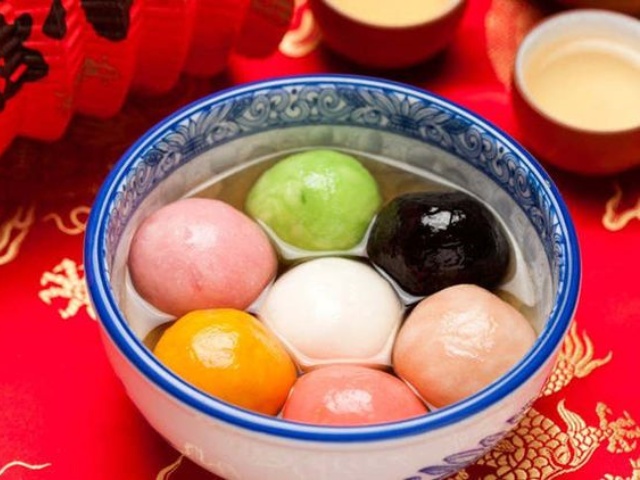
Yuanxiao (Northern Style): The filling is cut into small cubes, moistened, and then rolled in dry glutinous rice flour. This process is repeated until the balls reach the desired size, resulting in a drier, slightly chewier texture.
Tangyuan (Southern Style): The filling is wrapped in glutinous rice dough that has been kneaded with water, similar to making dumplings. This produces a smoother, more uniform surface and a softer, more delicate texture.
These delightful little spheres, typically filled with sweet ingredients like black sesame, red bean paste, crushed peanuts, or osmanthus flowers, are more than just a dessert. Their round shape is the ultimate symbol of the festival. It represents wholeness, togetherness, and unity—the completeness of a family gathered as one. The very name "Tangyuan" sounds similar to the word for "reunion" (tuanyuan), and sharing a warm bowl of these sweet treats is both a celebration and a promise of family harmony.
Beyond the Sweet: Savory Traditions
While sweet Tangyuan dominate the festival's culinary landscape, many regions have their own savory traditions. In parts of Zhejiang province, families prepare a dish called "yuanxiao with vegetables"—the rice balls are boiled and then stir-fried with ham, bamboo shoots, and peas. In Fujian, where our headquarters are located, some communities enjoy a savory soup with small, unfilled rice balls cooked with dried shrimp, mushrooms, and greens.
This diversity reminds us that food traditions are living things, constantly evolving and adapting to local tastes and ingredients. It's a philosophy that guides our work at Amoytop as well—while we honor traditional recipes and methods, we're always exploring how to bring the best of China's culinary heritage to modern tables around the world.
Part III: Amoytop's Connection to the Festival's Values
Our Commitment to Freshness and Hope
This concept of bringing quality and unity to the table is at the very core of our work here at Amoytop. Our company was founded on the belief that good food connects people—across generations, across regions, across oceans. It's why we've worked so hard to build a complete product link, from the fertile farmlands of South and North China to your pantry.
We take immense pride in our two registered trademarks, which perfectly capture our philosophy:
"HOPELAND" : This name reflects our core belief that our products, rooted in the rich lands of China, can bring hope, nourishment, and joy to every family. Just as the lanterns carry hopes for the future, our canned foods are crafted to bring a taste of wholesome goodness to your table, no matter the season. Whether it's the earthy richness of our canned edible fungus or the sun-sweetened perfection of our fruits, every product carries a promise of quality that families can rely on.
"FRESHSIMLE" : This embodies our commitment to using fresh raw materials and simple processes. We want every bite of our canned vegetables, fruits, and seafood to be a straightforward, enjoyable experience. It's about making the natural taste of the harvest available to everyone, everywhere, with the simple pleasure of quality. No artificial complexity, no unnecessary additives—just the pure, honest flavor of carefully selected ingredients.
Our Network: From Zhangzhou to Dangshan
Our journey began in 2009, and over the past seventeen years, we've built a network that spans China's most productive agricultural regions:
Zhangzhou, Fujian: Our factory in Zhangzhou specializes in products from southern China—bamboo shoots, mushrooms, tropical fruits like longans and lychees, and a variety of vegetables. The region's mild climate and rich soil produce ingredients with distinctive character and flavor.
Dangshan, Anhui: In the north, our Dangshan facility focuses on temperate crops—pears, peaches, apples. The contrast between northern and southern agriculture allows us to offer a truly comprehensive product range.
This geographic diversity is our strength. When one region's growing season ends, another's begins, allowing us to maintain a consistent supply of high-quality ingredients year-round. It's a logistical achievement that requires careful coordination, but it's essential to our mission of bringing freshness to tables everywhere, regardless of season.
Our Products: A Complete Offering
Today, our business encompasses a wide range of products:
Canned Vegetables: From crisp bamboo shoots and tender asparagus to mixed vegetables perfect for quick meals, our vegetable line brings garden freshness to any kitchen.
Canned Fruits: Peaches, pears, lychees, longans, and fruit cocktails—each packed at peak ripeness to capture nature's sweetness.
Canned Fish: Quality seafood options that bring the taste of the ocean to inland tables.
Canned Mushrooms: Mushrooms and other fungi, prized in Asian cuisine for their texture and umami flavor.
Each product category reflects our commitment to quality and our understanding that good food starts with good ingredients.
Part IV: Bringing the Festival to Your Table
From Our Tables to Yours
As you enjoy your Tangyuan tonight, perhaps consider the other ingredients that make a festive meal complete. At Amoytop, we specialize in providing exactly that: reliable, high-quality ingredients that form the foundation of delicious meals.
Imagine a family reunion dinner featuring:
Canned Bamboo Shoots stir-fried with strips of pork and a splash of Shaoxing wine—the bamboo's delicate crunch contrasting with the tender meat.
Canned Mushrooms simmered in a light broth with tofu and greens, creating a comforting soup that warms from within.
Canned Longans served chilled as a palate-cleansing dessert alongside the traditional Tangyuan.
Canned Mixed Vegetables quickly stir-fried with garlic and oyster sauce, adding color and nutrition to the feast.
These aren't just convenient options—they're quality ingredients that can stand proudly alongside fresh market purchases. Our careful processing ensures that the vegetables retain their texture, the fruits their sweetness, and all products their nutritional value.
Quality You Can Trust
Our management tenets of "Honesty, Credibility, Cooperation, and Win-Win" guide every step of our process, ensuring that what reaches your table is nothing short of excellent:
Honesty in our labeling and representations—you deserve to know exactly what you're getting.
Credibility built through years of consistent quality and reliable service.
Cooperation with our growers, our factory workers, and our distribution partners to maintain the highest standards.
Win-Win relationships that benefit everyone from the farmer in Zhangzhou to the family opening our cans in kitchens around the world.
Part V: Looking Forward
The Festival as a New Beginning
The Lantern Festival traditionally marks the end of Chinese New Year celebrations, but it's also seen as a new beginning. After weeks of festivities, families return to their regular lives, carrying with them the warmth of reunion and the hopes symbolized by the lanterns.
For farmers, this is the time when spring planting begins in earnest. For businesses like ours, it's a time to reflect on the year past and plan for the year ahead. The full moon reminds us that cycles continue—seasons turn, crops grow, and families gather again and again around tables laden with good food.
Our Vision for the Future
As we look toward the future at Amoytop, we're guided by the same principles that have brought us this far. We're exploring new products, new markets, and new ways to serve our customers. We're investing in sustainable practices that will protect the lands—our "Hopeland"—for future generations. And we're constantly refining our processes to ensure that "Freshsimle" remains a promise we can keep.
In a world that often feels divided, food remains a universal language. A can of peaches from our Dangshan factory might end up in a school lunch in Tokyo, a family picnic in Sydney, or a holiday dessert in Vancouver. Wherever it goes, it carries with it a piece of China's agricultural heritage and our company's commitment to quality.
Conclusion: A Toast to the Year Ahead
As the last lanterns are lit and the final riddles are solved, the Lantern Festival gently brings the lively Chinese New Year celebrations to a close. It leaves us with a heart full of warmth, a sense of unity with our loved ones, and a hopeful gaze toward the future.
The full moon tonight is the same moon that has shone upon countless Lantern Festivals over two millennia. It has seen emperors and peasants, wars and peace, feast and famine. Tonight, it shines upon us—a global community connected by shared hopes and the simple pleasure of good food shared with good people.
From our Amoytop teams in Xiamen, Zhangzhou, and Dangshan, to you and your family around the world, we wish you a joyous and peaceful Lantern Festival. May the coming year be as bright and sweet as the full moon and as unified and complete as the round Tangyuan on your spoon.
Happy Lantern Festival! 元宵节快乐!
We invite you to explore our range of products and see how "HOPELAND" and "FRESHSIMLE" can bring quality and hope to your table all year round. Visit our website to learn more about our canned vegetables, fruits, and seafood. Whether you're a distributor looking for reliable supply or a family looking for quality ingredients, we're here to serve you.
About Xiamen Amoytop Import & Export Co., Ltd.
Founded in 2009, Xiamen Amoytop Import & Export Co., Ltd. has grown into a professional manufacturer and exporter of processed foods. With our head office in Xiamen, China, and holding factories in Zhangzhou and Dangshan, we maintain a complete product link covering canned vegetables, fruits, seafood, edible fungus, and bulk raw materials. Our brands—HOPELAND and FRESHSIMLE—represent our commitment to quality, freshness, and the hope that good food brings to tables everywhere.