

When you walk down the canned vegetable aisle in any supermarket, asparagusoften appears in two distinct forms: elegant transparent glass jars where you can clearly see the spears inside, and sturdy square-shaped tin cans (made of tinplate) that look compact, practical, and no-nonsense. Faced with these two options, many shoppers feel uncertain—which packaging is actually better for canned asparagus?
There is no single “best” answer. What counts as “better” depends on your priorities: food safety, convenience, visual appeal, storage needs, transportation, or long-term shelf life. Both glass jars and square tin cans have clear strengths and weaknesses. Below is a detailed, side-by-side comparison across multiple dimensions to help you make an informed decision.
Material Characteristics Comparison
Glass Jars: Transparent, Chemically Stable, but Fragile and Heavy
Glass has been used for food packaging for centuries and remains popular for premium canned vegetables. Its biggest advantage is complete transparency. Shoppers can instantly evaluate the size, color, shape, firmness, and wholeness of the asparagus spears without opening the container. This “what you see is what you get” feature builds immediate trust and makes glass jars especially attractive in retail settings.
Chemically, glass is highly inert. It does not react with the natural organic acids found in asparagus or most vegetables. This means the flavor, color, and nutritional profile of the asparagus are less likely to be altered by the container itself. Glass also provides an excellent barrier against oxygen and light when properly sealed, helping preserve quality over time.
However, glass has notable drawbacks. It is significantly heavier than metal cans, which increases shipping costs and makes it less convenient for consumers who carry groceries frequently. Glass is also fragile—it can crack or shatter if dropped, creating safety hazards and potential waste during transport or at home. Additionally, glass has poor thermal conductivity, so the sterilization (heat-processing) process takes longer compared to metal. This extended heating time can sometimes result in slightly softer texture in the final product.
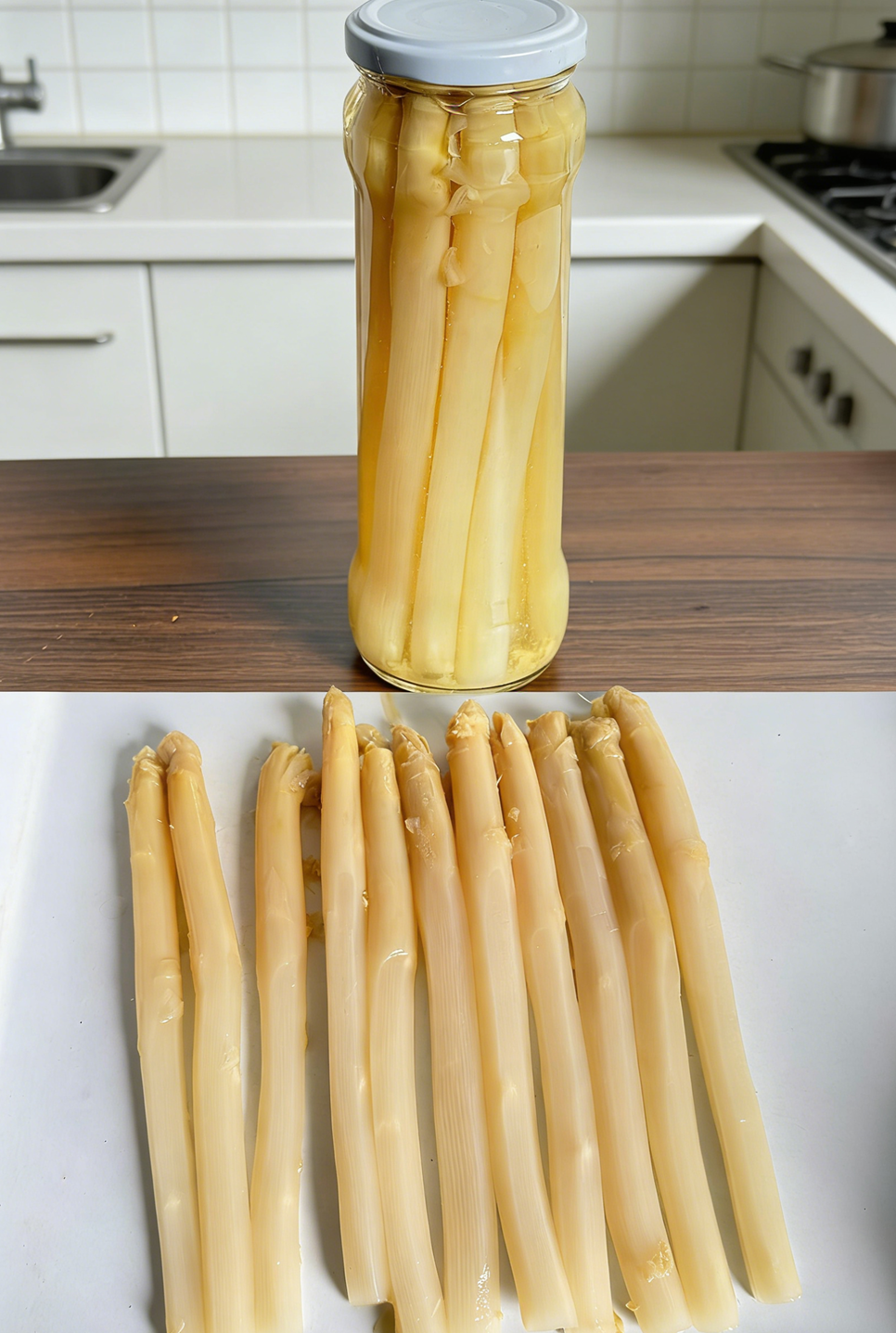
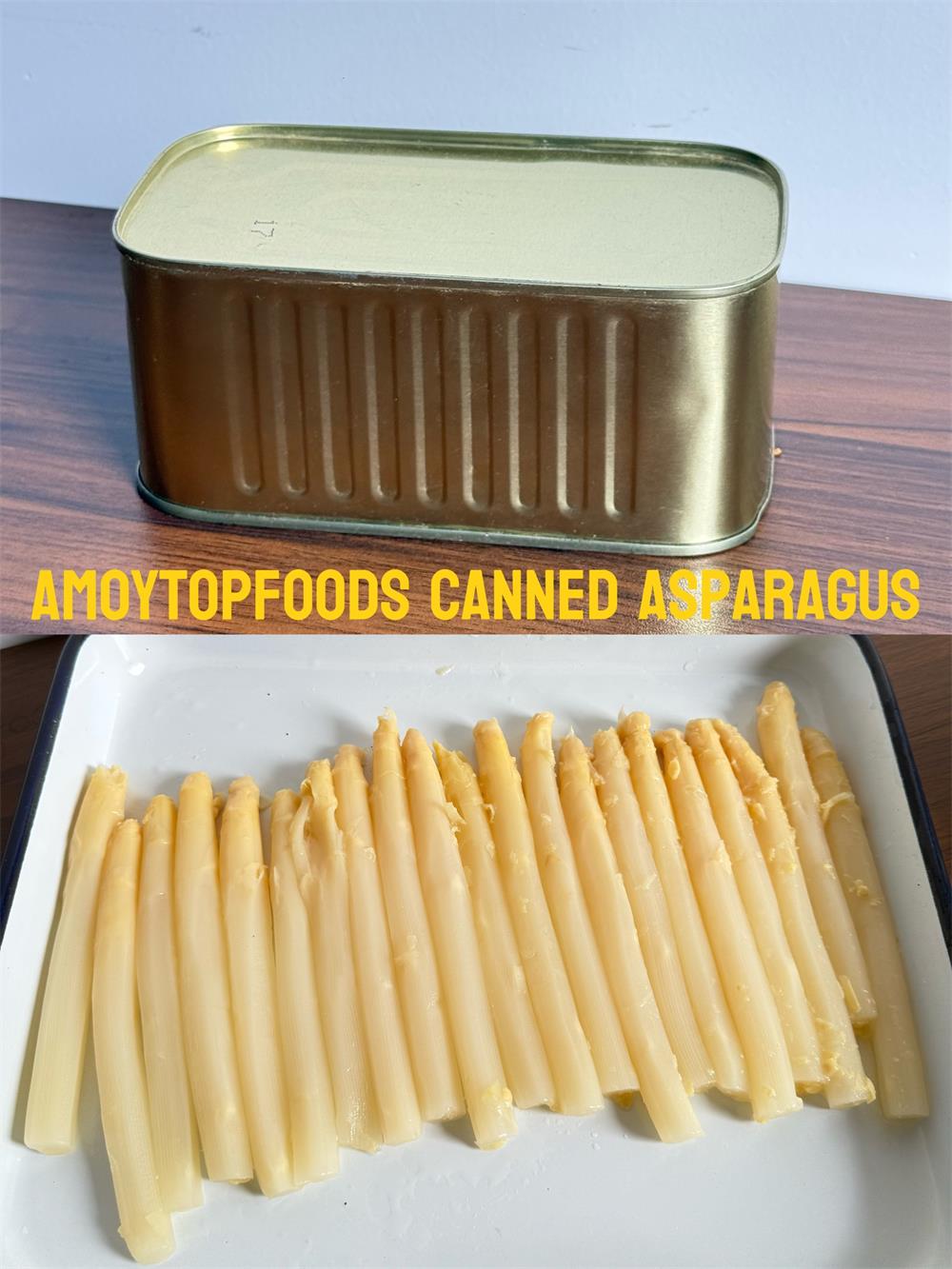
Square Tin Cans (Tinplate): Lightweight, Durable, but Require Protective Coatings
Square tin cans are made from thin sheets of low-carbon steel coated with tin, then formed into a rectangular or square shape. These cans offer several practical advantages:
· Lightweight and strong: They weigh much less than glass jars, resist denting and crushing better, and are far less likely to break during shipping, stacking, or everyday handling.
· Excellent heat conductivity: Metal transfers heat quickly and evenly, allowing shorter sterilization times during manufacturing. This can help preserve the firm texture and nutritional value of asparagus better than prolonged heating in glass.
· Temperature resilience: Tinplate handles rapid temperature changes (from hot processing to cooling) without cracking.
· Space efficiency: The square or rectangular shape allows cans to be stacked tightly on shelves, in warehouses, and in pantries, saving storage space.
The main concern with metal cans is potential chemical interaction with food. Asparagus is known to contain sulfur compounds and proteins that can react with iron or tin, sometimes causing black discoloration inside the can (a phenomenon often called “blackening” in asparagus canning). To prevent this, high-quality asparagus tin cans use specially formulated food-grade internal coatings (lacquers or enamels) that act as a barrier between the metal and the food.
When these coatings are properly applied and of high quality, the risk is minimal. However, if the coating is damaged, thin, or of poor quality, there is a small chance of metallic taste, discoloration, or minor migration of tin/iron ions over very long storage periods. Modern food safety regulations in most countries set strict limits on such migration, and reputable brands comply with them.
Practical Performance Comparison
Here is a clear side-by-side table summarizing key practical differences:
Aspect | Glass Jar | Square Tin Can (Tinplate) |
Visibility | Fully transparent – easy to inspect quality | Opaque – cannot see contents until opened |
Weight | Heavy | Significantly lighter |
Durability / Drop Resistance | Fragile, breaks easily | Strong, dent-resistant, survives drops |
Sealing | Good – twist-off lids with vacuum seal | Excellent – double-seam technology |
Heat Conductivity | Poor – longer sterilization time | Excellent – shorter, more efficient processing |
Chemical Inertness | Excellent – no reaction with food | Good only if high-quality coating is used |
Ease of Opening | Very easy – twist cap | Requires can opener (pull-tab versions exist on some) |
Reusability / Recycling | Highly reusable and recyclable | Recyclable but mainly single-use |
Stacking & Storage | Poor – round shape, takes more space | Excellent – square shape stacks efficiently |
Portability | Less convenient for travel or outdoor use | Ideal for camping, picnics, bulk buying |
Cost | Usually more expensive | Generally more affordable |
Quality and Preservation Effectiveness
Both packaging types can deliver safe, long-shelf-life asparagus when manufactured correctly. The fundamental goal of canning is to create an airtight, sterile environment that prevents spoilage by bacteria, yeasts, or molds.
According to food processing guidelines (including those from the USDA), heat penetration is faster and more uniform in metal cans than in glass jars. For high-water-content vegetables like asparagus, glass jars often require 15–25 minutes longer processing time at the same temperature. Shorter processing in metal cans can result in slightly firmer texture and better retention of heat-sensitive nutrients such as vitamin C and certain B vitamins.
On the other hand, glass offers superior long-term chemical stability. Because glass does not react with food at all, there is virtually no risk of flavor changes, off-colors, or trace metal pickup even after several years. In metal cans, even with excellent coatings, there remains a theoretical possibility of very slow coating degradation or minor ion migration after extremely long storage (e.g., 3–5+ years), although this is rare in well-made products stored under proper conditions (cool, dark, stable temperature).
In practice, both formats routinely achieve shelf lives of 2–5 years or more when unopened. Once opened, asparagus from either package should be transferred to a glass or plastic container and refrigerated, where it will keep for about 3–5 days.
Consumer Scenarios and Practical Recommendations
Choose Glass Jars When:
· You want to visually inspect the asparagus spears for size, color, and wholeness before buying.
· You plan to eat the product within a few months and value premium presentation.
· You are buying for gifting, dinner parties, or direct table serving (the jar looks attractive on the table).
· You prioritize absolute chemical inertness and are willing to pay a premium for perceived higher safety and reusability.
· You prefer the traditional, artisanal image often associated with glass-packed vegetables.
Choose Square Tin Cans When:
· You buy in larger quantities for long-term pantry storage.
· You need lightweight, unbreakable packaging for camping, hiking, boating, picnics, or emergency kits.
· You are a restaurant, catering business, or home cook who values efficient storage and stacking.
· Budget and convenience matter more than being able to see the product beforehand.
· You trust established brands that use high-quality food-safe internal coatings.
Environmental and Sustainability Considerations
Glass jars are infinitely recyclable and can often be reused at home for other purposes (spices, leftovers, etc.). However, their heavier weight means higher carbon emissions during transportation. Tinplate cans are also highly recyclable (steel is one of the most recycled materials globally) and require less energy to ship due to lower weight. Square shapes further reduce wasted space in trucks and warehouses. In terms of overall environmental impact, well-managed metal cans often have a slight edge for large-scale distribution, while glass may be preferable for small-batch or local premium products.
Final Thoughts
Canned asparagus in glass jars versus square tin cans ultimately comes down to a trade-off between visible reassurance and practical convenience.
If you value the ability to see exactly what you’re buying, want maximum chemical inertness, and don’t mind the extra weight and cost, go for the glass jar. It offers peace of mind and a more premium feel.
If you prioritize portability, durability, efficient storage, lower cost, and slightly better processing efficiency for texture and nutrition retention, the square tin can is usually the smarter everyday choice—provided you stick with reputable brands that use proper internal coatings.
In both cases, the quality of the asparagus itself and the manufacturer’s processing standards matter far more than the packaging type. Always check for:
· Intact seals and no bulging lids (“swollen” or “fat” cans are a sign of potential spoilage).
· Expiration or “best by” dates.
· Trusted brands with transparent quality control.
· Storage in a cool, dry place away from direct sunlight.
Whether you pick glass or tin, properly canned asparagus remains one of the most convenient ways to enjoy this nutritious vegetable year-round. It retains good amounts of fiber, folate, vitamins A and K, and antioxidants, making it a healthy addition to salads, stir-fries, soups, or side dishes.
Ultimately, there is room for both formats on supermarket shelves—and in your pantry. Many households keep glass jars for special occasions or visual appeal and stock square tins for regular use and emergency reserves. The “better” option is simply the one that best matches your lifestyle, storage habits, and personal definition of quality.