

In today’s fast-paced food industry, where every minute counts in the kitchen and every ingredient impacts the bottom line, finding reliable, high-quality components that deliver both flavor and efficiency is essential. Enter premium canned sweet corn—naturally sweet, freshly packed, and ready to eat straight from the can. Sourced from 100% natural, non-GMO varieties and free from artificial preservatives, this product captures the corn’s original vibrant sweetness and crisp texture at its peak. Whether you operate a large-scale food manufacturing facility or manage the bustling kitchens of restaurant chains, this versatile ingredient stands out as the smart choice for maximizing operational efficiency while elevating menu quality.
The global canned sweet corn market reflects strong demand, with projections showing steady growth driven by convenience, health-conscious trends, and the need for consistent supply in foodservice and processing sectors. Valued at approximately USD 4 billion in recent years, the market is expected to expand at a CAGR of around 4-5% through the next decade, fueled by rising consumption in North America and beyond. In the U.S. alone, consumers enjoy sweet corn in various forms, with canned varieties contributing significantly to annual per capita intake of about 26 pounds of sweet corn products. This enduring popularity underscores why food professionals turn to canned corn for dependable performance.
The Allure of Natural Sweetness: Why Non-GMO Matters
What sets superior canned sweet corn apart begins in the field. Selected from 100% natural, non-GMO varieties, these kernels retain the corn’s inherent genetic profile without genetic modification. Non-GMO corn often boasts higher natural sugar content in supersweet varieties, delivering that unmistakable burst of sweetness with every bite. Unlike some processed alternatives, this corn relies on its own natural sugars—no added sweeteners needed—preserving an authentic taste that enhances everything from salads to casseroles.
Free from preservatives, the product undergoes careful processing that locks in freshness. The canning process captures the corn at its optimal maturity, when kernels are plump, juicy, and bursting with flavor. This results in a crisp texture that holds up well in both hot and cold applications, avoiding the mushiness sometimes associated with lower-quality options. Health-conscious diners appreciate this purity: canned sweet corn provides dietary fiber for digestive health, antioxidants like lutein and zeaxanthin for eye support, essential B vitamins (including B6, thiamine, and folate), and minerals such as magnesium and phosphorus. Studies highlight that processed sweet corn can even exhibit higher antioxidant activity than fresh in some cases due to the way heat releases beneficial compounds.
For manufacturers and chefs wary of supply chain disruptions or seasonal limitations, non-GMO sourcing offers peace of mind. It aligns with growing consumer preferences for clean-label products, helping brands meet demands for transparency without compromising on yield or consistency. In an era where sustainability and ethical sourcing influence purchasing decisions, choosing non-GMO varieties supports diverse agricultural practices and reduces reliance on monoculture systems.
From Field to Can: The Art and Science of Fresh Packing
The journey of premium canned sweet corn emphasizes speed and quality control to ensure “freshly packed” isn’t just a slogan—it’s a reality. Harvesting occurs during the peak season when ears reach ideal maturity, typically in late summer through early autumn. Within hours of picking, the corn moves through an efficient processing line designed to preserve nutrients and texture.
The standard canning workflow includes husking, silking, and thorough washing to remove any debris. Kernels are then precisely cut from the cob—avoiding scraping to maintain whole-kernel integrity—and blanched briefly to halt enzyme activity that could degrade quality. Following this, the corn is filled into cans with a simple packing medium of water and a touch of salt (if desired), adhering to strict standards like those from the USDA for canned whole kernel corn. These guidelines ensure uniform color, good tenderness, minimal defects, and excellent flavor.
Sterilization under high heat seals the deal, creating a shelf-stable product that retains its natural sweetness and crispness for months or even years. This rapid “field-to-can” approach minimizes nutrient loss compared to longer storage of fresh produce, which can lose vibrancy during transport. The result? Kernels that taste remarkably close to just-picked corn, with consistent drained weights and fill levels that support precise recipe scaling.
Quality doesn’t stop at production. Reputable canning facilities implement rigorous testing for appearance, tenderness, maturity, and defects, often targeting U.S. Grade A standards where kernels exhibit similar varietal characteristics, good color, and well-cut presentation. Vacuum-packed options further enhance texture by reducing liquid content, ideal for applications where excess moisture could affect final dishes.
Ready to Eat: Convenience That Transforms Kitchen Operations
“Ready to eat” is more than convenience—it’s a game-changer for menu efficiency. In busy restaurant kitchens, prep time is a precious resource. Traditional fresh corn demands husking, silking, blanching, and cutting, processes that can take 10-20 minutes per batch while generating waste and requiring skilled labor. Canned sweet corn eliminates these steps entirely. Open the can, drain (or use the liquid in stocks and sauces), and incorporate directly into recipes. This slashes labor costs and reduces the risk of inconsistent quality due to variable fresh produce.
For large-scale food manufacturing, the benefits compound. Bulk production lines benefit from predictable supply, uniform kernel size, and long shelf life, enabling just-in-time inventory management without refrigeration demands. No more worrying about seasonal shortages or spoilage during peak demand periods like summer festivals or holiday rushes. Canned corn’s stability supports year-round menu planning, from comfort food classics in winter to vibrant summer salads.
Consider real-world efficiency gains. A restaurant chain preparing corn salsa for multiple locations can standardize recipes with canned product, ensuring every batch delivers the same sweet-crisp profile. In manufacturing, adding kernels to ready-meals, soups, or frozen vegetable mixes becomes seamless, improving throughput and minimizing downtime. Data from foodservice operations shows that incorporating canned vegetables helps maintain food costs in the targeted 28-35% range by reducing waste and variability. Chefs report faster ticket times and more creative bandwidth when staple ingredients like corn require zero prep.
Menu Innovation: Versatile Applications Across Categories
The versatility of this naturally sweet canned corn opens endless culinary possibilities, making it a staple for boosting menu appeal without added complexity.
In salads and cold preparations, drained kernels add pops of color, sweetness, and texture. Think Mexican street corn-inspired salads with cotija cheese and lime, or vibrant quinoa bowls where corn’s natural sugars balance earthy grains. Its crispness holds up beautifully, even after dressing.
For hot dishes and sides, corn shines in casseroles, chowders, and stir-fries. Creamed corn variations benefit from the inherent creaminess of supersweet kernels, while grilled or sautéed applications (quick pan-heating) recreate that fresh-off-the-cob experience. Pizza toppings? A handful of corn kernels adds unexpected sweetness and visual interest to veggie or BBQ pies—pairing perfectly with the title’s nod to efficiency for menus.
In manufacturing and value-added products, canned corn integrates into everything from canned soups and ready-to-heat meals to snacks and pet foods. Its fiber content supports health claims, while low glycemic properties (compared to some starches) appeal to wellness-focused lines. Bakers incorporate corn into muffins or cornbread mixes for moisture and subtle sweetness.
Global cuisines embrace it too: Asian-inspired fried rice, Latin American elote dips adapted for bulk, or Mediterranean vegetable medleys. With sizes ranging from consumer-friendly to industrial-scale, operators can match packaging to exact needs, minimizing over-purchasing or partial-use waste.
Nutritionally, incorporating more corn supports balanced menus. Its fiber aids digestion, antioxidants promote eye health, and B vitamins contribute to energy metabolism—all while delivering affordable, plant-based appeal in an era of rising demand for vegetarian and flexitarian options.
Available Sizes for Every Operation
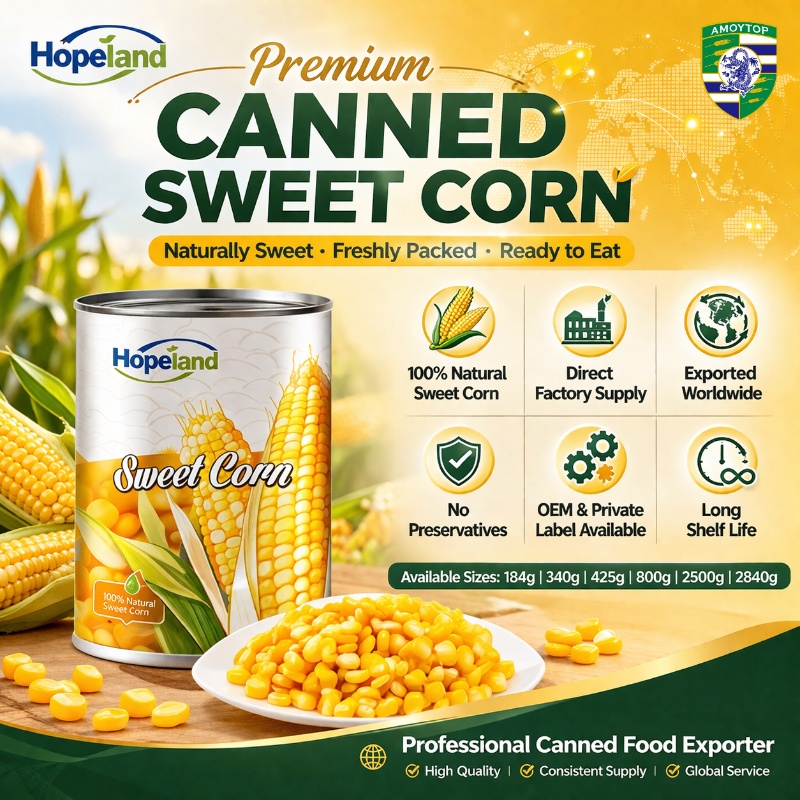
Flexibility in packaging ensures this product fits seamlessly into diverse workflows:
· 184g and 340g: Ideal for small-batch restaurant use or retail private labeling.
· 425g: A popular standard size for mid-volume kitchens.
· 800g: Suited for larger prep stations or catering.
· 2500g and 2840g: Bulk options perfect for high-volume manufacturing, commissaries, and chain restaurants seeking cost efficiencies through fewer container changes.
These sizes support precise portion control and inventory management, whether you’re portioning for individual servings or scaling recipes for thousands.
Why Choose This for Bulk Purchase and Long-Term Partnerships
In a competitive landscape, partnering with a trusted canning factory for bulk canned corn delivers strategic advantages. Consistent quality reduces rejection rates in manufacturing and complaint risks in foodservice. Cost predictability—thanks to stable shelf life and reduced waste—helps control food costs amid fluctuating fresh produce prices. Moreover, the non-GMO, preservative-free profile strengthens marketing narratives around clean eating and sustainability.
Foodservice operators facing labor shortages particularly value the efficiency: fewer hours spent on prep mean staff can focus on signature dishes and customer experience. Manufacturers gain supply chain resilience, with product available regardless of weather impacts on fresh harvests.
The broader corn market context reinforces this choice. While overall corn production sees record U.S. yields in recent seasons, processed sweet corn maintains steady demand due to its convenience factor. As global consumption patterns evolve, with emphasis on efficient, nutritious ingredients, canned sweet corn positions businesses for growth.
Sustainability and Future-Proofing Your Menu
Beyond immediate efficiency, choosing high-quality canned corn contributes to broader sustainability goals. By utilizing produce at peak harvest and minimizing spoilage through canning, the process reduces food waste compared to fresh alternatives that may not reach consumers in time. Long shelf life means less frequent deliveries, lowering transportation emissions for bulk buyers.
As consumer trends shift toward health and wellness, products free from unnecessary additives resonate. Canned corn’s natural profile—rich in phytochemicals and fiber—aligns with recommendations for whole-grain and vegetable-rich diets that may lower risks of chronic conditions.
Looking ahead, the canned sweet corn sector is poised for continued expansion, driven by innovation in packaging (such as easier-open lids or recyclable options) and applications in plant-based innovations. Businesses that integrate such ingredients now will benefit from established supply relationships as demand grows.
Take the Next Step: Request Free Samples Today
Ready to experience the difference that naturally sweet, freshly packed, ready-to-eat canned sweet corn can make in your operations? Whether refining recipes for restaurant chains or optimizing production lines in food manufacturing, this product delivers on flavor, texture, nutrition, and—most critically—efficiency.
Available in the sizes listed above, it offers scalable solutions tailored to your needs. Contact us today to request free samples and detailed product specifications, including nutritional information, quality certifications, and custom labeling options. Our team is prepared to discuss bulk purchase arrangements, pricing, and how this corn can seamlessly integrate into your menu or product lineup.
Discover how one simple ingredient can transform your kitchen workflow, delight customers with consistent quality, and support your business goals for years to come. Elevate your offerings with corn that’s as efficient as it is delicious.