

Introduction
If you're sourcing 227G/567G Canned Bamboo Shoots Slice, the most important factors aren't just price or can size. Consistent raw material quality, slice uniformity, sterilization control, packaging reliability, and OEM flexibility all have a direct impact on your retail sales and long-term supply chain stability.
We've noticed that many importers today are looking beyond simple product specifications. They want suppliers who understand labeling regulations, private label requirements, shipping performance, and the challenges of supplying supermarkets, wholesalers, foodservice distributors, and industrial food manufacturers.
This guide explains everything buyers should know before purchasing 227G/567G Canned Bamboo Shoots Slice, based on manufacturing practices, export experience, and real sourcing situations.
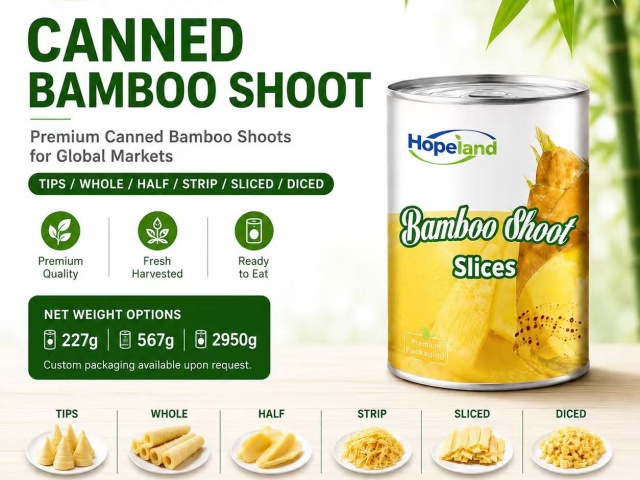
What Is 227G/567G Canned Bamboo Shoots Slice?
227G/567G Canned Bamboo Shoots Slice refers to young bamboo shoots that are peeled, sliced into uniform pieces, packed into cans with water or light brine, hermetically sealed, and commercially sterilized for long shelf life.
Typical specifications include:
Item | 227G | 567G |
Net Weight | 227 g | 567 g |
Drained Weight | Customizable | Customizable |
Shape | Slice | Slice |
Packing Medium | Water / Light Brine | Water / Light Brine |
Shelf Life | 36 Months | 36 Months |
Storage | Ambient | Ambient |
These sizes are among the most widely imported for retail supermarkets and Asian grocery chains.
Why Are Bamboo Shoot Slices So Popular?
There are several reasons.
First, sliced bamboo shoots save preparation time.
Restaurants don't need to peel or cut fresh shoots.
Food manufacturers can add them directly into recipes.
Retail consumers enjoy the convenience without sacrificing texture.
We've noticed that frozen and canned vegetables are becoming more attractive as labor costs continue rising in many countries.
For restaurants serving hundreds of meals every day, every minute saved during preparation matters.
Where Do High-Quality Bamboo Shoots Come From?
China remains the world's largest producer and exporter.
The best production regions usually have:
· abundant mountain rainfall
· suitable soil conditions
· rapid harvesting during spring
· nearby processing factories
Here's something many buyers overlook.
Fresh bamboo shoots begin changing rapidly after harvesting.
If transportation from the field to the processing plant takes too long, texture starts becoming fibrous.
Experienced manufacturers normally process bamboo shoots within a very short time after harvesting to preserve tenderness.
This is one reason factory location matters much more than many new importers realize.
Inside the Manufacturing Process
The manufacturing process sounds simple.
Doing it consistently is another story.
A typical production flow includes:
1. Fresh bamboo shoot selection
2. Peeling
3. Washing
4. Grading
5. Uniform slicing
6. Blanching
7. Filling cans
8. Adding water or light brine
9. Vacuum sealing
10. High-temperature sterilization
11. Cooling
12. Inspection
13. Carton packing
Here’s where things get tricky.
Sterilization isn't simply about making products safe.
Over-processing can soften bamboo shoots too much.
Under-processing creates food safety risks.
Factories with extensive export experience carefully balance sterilization time, temperature, and can size to achieve both safety and texture consistency.
Why Uniform Slice Thickness Matters
Honestly, this is where many buyers get confused.
Two cans may have identical net weight.
But the eating experience can be completely different.
If slices vary significantly in thickness:
· cooking time becomes inconsistent
· appearance looks less premium
· texture varies within the same can
· restaurant chefs struggle to control recipes
Professional slicing equipment produces much more consistent products than manual processing.
This consistency becomes especially important for foodservice customers.
Packaging Options for Different Markets
Different markets have different preferences.
Common options include:
Retail Packing
· 227G
· 567G
· Easy Open End (EOE)
· Standard Lid
Foodservice
· Large cans
· Bulk packaging
OEM Private Label
Many supermarket chains today prefer private labels instead of selling factory brands.
Typical OEM services include:
· label design
· multilingual artwork
· nutrition panel customization
· barcode printing
· carton design
· pallet configuration
· shipping mark customization
We've noticed that private label demand has increased significantly over the past few years because retailers want stronger brand recognition and better customer loyalty.
Choosing Water or Light Brine
Different countries have different consumer habits.
Water-packed products appeal to health-conscious consumers.
Light brine offers slightly enhanced flavor while maintaining a clean ingredient list.
Many buyers simply copy previous orders.
Instead, suppliers should discuss target consumers before deciding packing medium.
Small formulation differences can influence repeat purchases.
Common Quality Problems Importers Face
Here are some issues we've seen during international trade.
Uneven Color
Natural bamboo shoots never have perfectly identical color.
Season, maturity, and growing conditions all influence appearance.
Small differences are normal.
Broken Slices
Poor handling during filling may increase breakage.
Better grading and equipment help reduce this.
Cloudy Liquid
Cloudiness can result from natural starch release.
It doesn't necessarily indicate spoilage.
Proper sterilization and raw material selection help maintain better appearance.
Fibrous Texture
Older bamboo shoots contain more fiber.
Harvest timing is critical.
Factories sourcing younger shoots generally produce more tender products.
How OEM Projects Usually Work
Many first-time buyers assume OEM simply means printing a new label.
Actually, the process involves much more.
A typical OEM workflow includes:
· confirming specifications
· selecting can size
· approving label artwork
· checking legal compliance
· sample production
· mass production
· inspection
· container loading
Experienced suppliers often review artwork before printing to avoid costly labeling mistakes.
We've seen shipments delayed because mandatory import language requirements were overlooked.
Packaging Engineering Matters More Than Many Buyers Think
Here’s the problem.
Many purchasing managers focus almost entirely on FOB price.
Packaging engineering often receives little attention until products arrive.
We've seen cartons collapse after long-distance ocean transportation because board strength wasn't matched to container stacking conditions.
Moisture-resistant cartons, proper pallet wrapping, and suitable loading methods help reduce transportation damage.
These details rarely appear on quotations.
They become very important after thousands of kilometers at sea.
Applications Across Different Industries
227G/567G Canned Bamboo Shoots Slice is widely used in:
· Asian restaurants
· Chinese cuisine
· Thai restaurants
· Japanese food production
· Ready meals
· Instant noodles
· Frozen meals
· Stir-fry products
· Soup manufacturing
· Catering companies
Its versatility makes inventory management much easier.
One product can serve multiple recipes.
What Buyers Should Evaluate Before Choosing a Supplier
Instead of comparing only prices, experienced buyers usually ask:
· Is the factory export experienced?
· Can product consistency be maintained year after year?
· Are OEM projects well supported?
· Is quality inspection documented?
· Can loading schedules remain stable during peak season?
· Does the factory understand destination market regulations?
We've noticed that long-term cooperation usually depends more on communication and consistency than on saving a few cents per can.
Why Manufacturing Experience Makes a Difference
Large-scale canning requires coordination across agriculture, production, quality control, packaging, and logistics.
Factories with mature production systems generally have:
· standardized SOPs
· traceability records
· batch inspections
· metal detection
· vacuum testing
· seam inspection
· sterilization validation
· finished product sampling
These controls reduce quality variation between production lots.
For importers supplying supermarket chains, consistency is often more valuable than chasing the lowest price.
FAQ
1. What is the shelf life of 227G/567G Canned Bamboo Shoots Slice?
Normally up to 36 months when stored in a cool, dry place.
2. Can bamboo shoots be supplied under a private label?
Yes. Most professional manufacturers offer OEM and private label production, including customized labels, cartons, and packaging.
3. Are canned bamboo shoots already cooked?
Yes.
They have been commercially sterilized and are ready to eat or use directly in cooking.
4. Why do bamboo shoots sometimes have slight color differences?
Natural agricultural products vary with harvest season, growing conditions, and maturity.
Small color variation is considered normal.
5. Can specifications be customized?
Yes.
Net weight, drained weight, slice thickness, packaging style, and carton configuration can usually be customized according to customer requirements.
6. Is BPA-NI packaging available?
Many export manufacturers can provide BPA-NI coated cans depending on destination market requirements.
7. Which industries buy canned bamboo shoots most frequently?
Supermarkets, wholesalers, restaurant distributors, food manufacturers, catering companies, and private label importers are among the largest buyers.
8. What documents are usually available for export?
Depending on destination requirements, suppliers can generally provide health certificates, certificates of origin, commercial invoices, packing lists, and other export documentation.
Why Many Global Buyers Choose AMOYTOP Foods
At AMOYTOP Foods, bamboo shoots are sourced from carefully selected growing regions and processed under strict quality control to preserve their natural texture and freshness. The company supports OEM and ODM projects for international importers, supermarkets, distributors, wholesalers, and foodservice customers.
Available services include:
· 227G/567G Canned Bamboo Shoots Slice
· Customized drained weight
· Easy Open End (EOE) or standard lids
· Private label and OEM packaging
· Multilingual label design
· Flexible carton configurations
· Export documentation support
· Stable production capacity for long-term supply
The focus is not simply on manufacturing canned vegetables, but on helping customers build reliable and competitive product lines in their own markets.
Final Thoughts
227G/567G Canned Bamboo Shoots Slice continues to be a practical choice for retailers, foodservice distributors, and food manufacturers because it combines convenience, long shelf life, and consistent quality.
The best sourcing decisions come from looking beyond unit price. Processing speed after harvest, slice consistency, sterilization control, packaging engineering, and OEM capability all influence the product your customers ultimately receive. Choosing a manufacturer with proven export experience and dependable production systems can reduce quality risks, improve supply stability, and support long-term brand growth.