

Here’s the straight truth: canned arbutus offers reliable sweet-tart flavor, long shelf life, and year-round supply that works for busy kitchens and businesses, while fresh arbutus brings a brighter, more delicate taste and higher peak nutrition—but only when you can source perfect ripe fruit and use it fast. In my experience working with food manufacturers and importers, most end up choosing canned for practical reasons.
I’ve been in the canned food industry for over a decade, collaborating with factories across China on fruit processing lines. At companies like Amoytop Foods in Xiamen, with production facilities in Zhangzhou and beyond, we handle fruits like arbutus (often called yangmei or Chinese bayberry) every season. The debate between fresh and canned isn’t just academic. It affects waste numbers, menu consistency, and bottom lines.
The Real-World Supply Challenges
Fresh arbutus looks stunning—those bright red, bumpy little fruits with tiny hair-like projections on the skin. They grow mainly in southern China provinces like Fujian and Zhejiang, ripening in a short burst during early summer. Pick them at the right moment and you get juicy flesh with a wonderful mix of sweet, tangy, and floral notes, almost like a cross between strawberry, pomegranate, and a hint of citrus.
But here’s where things get tricky. The fruit is incredibly delicate. One rough handling during harvest or transport and you get bruises that turn into soft spots overnight. In hot weather, they start fermenting quickly, developing that slight boozy edge some people like but most kitchens hate for consistency. I’ve seen importers lose entire shipments because of delayed flights or customs holds. Waste rates can hit 30-50% easily.
That’s why canning became the go-to solution. At our lines, we select fruit at peak ripeness, process it within hours, and pack it in light syrup. The result holds the color, texture, and much of the flavor for 2-3 years. No more guessing when the next fresh batch arrives.
Breaking Down Taste and Texture Differences
Fresh arbutus at its best delivers a vibrant pop. The skin is thin and edible, the inside soft with small seeds that give a slight crunch or grittiness. Many describe it as refreshing with natural acidity that makes your mouth water. Chefs who forage or get local supplies love using it in raw preparations—simple fruit salads, blended smoothies, or even infused waters.
The problem? Consistency. Not every fruit on the tree ripens at the same pace. You might get some underripe sour ones mixed with overripe softer ones. In blind tastings I’ve run with restaurant clients, fresh wins when perfect, but averages out lower across a season.
Canned arbutus tells a steadier story. The heat process softens the texture slightly, making the fruit more tender and easier to eat or incorporate. The light syrup (typically 14-18° Brix in our standard specs) balances the natural tartness without making it cloying. Drain it well and the fruit works beautifully in baked goods, where the subtle cooked flavor blends right in.
Honestly, this is where many buyers get confused. They read “fresh is always better” and expect miracles. In actual commercial kitchens I’ve visited, canned versions shine in applications involving heat—muffins, sauces, cheesecakes, or even savory glazes—because the processing stabilizes the acids and sugars.
Nutrition: Fresh Edge vs Practical Reality
Fresh arbutus carries impressive numbers. Studies show it can deliver 200-400 mg of vitamin C per 100g in peak wild or well-grown batches, plus strong antioxidants from phenolics and flavonoids. The fiber content is notable too, often helping with digestion. Minerals like potassium and magnesium add to its profile.
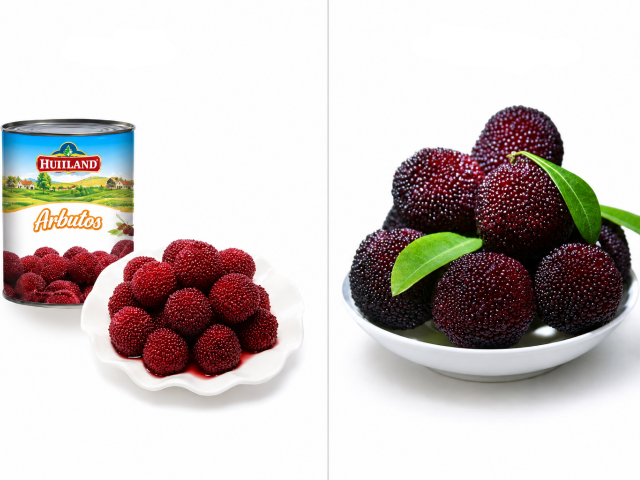
Canning does cause some loss—vitamin C is heat-sensitive, so you might see a 20-40% drop depending on the process. But here’s what many overlook: the fruit gets canned at its nutritional peak, locking in most minerals, fiber, and other bioactives. For businesses or families eating it year-round instead of just a few weeks, the overall intake can actually be higher.
At Amoytop Foods, we focus on clean processing—fruit, water, and sugar only in our basic lines. Clients often request low-sugar or juice-packed versions for health positioning. The controlled pH and Brix levels also support better food safety compliance, which matters hugely in B2B supply.
Inside the Production Process: Lessons from the Factory Floor
Let me walk you through what actually happens on a good canning line, because understanding this helps buyers make smarter choices.
First comes selection. Workers sort thousands of kilos by hand and machine, rejecting any damaged or unripe fruit. Speed matters—yangmei must move fast after harvest. Then cleaning, pitting (though many keep the pit for traditional appeal), and filling into cans. We use precise syrup formulation: too thin and the fruit floats and breaks; too heavy and it masks natural taste.
Retort processing follows—high-temperature sterilization that achieves commercial sterility while preserving as much texture as possible. Cooling, labeling, and packing complete the line. Our Zhangzhou facility has modern equipment that minimizes overcooking, keeping that signature red color vibrant.
One mistake I see new buyers make is assuming all canned arbutus is the same. Cheap lines might use heavy syrup to hide lower-grade fruit or skip proper sorting. That’s why working with established manufacturers who control their raw material sources pays off. We’ve refined these steps over years of feedback from European, Middle Eastern, and domestic clients.
Real Cases from the Industry
Take the European distributor we worked with a couple seasons back. They tried importing fresh yangmei by air for premium stores. Costs were high, rejections frequent, and shelf life in stores was just days. Switching to our canned line in 425g and A10 bulk sizes cut their waste by over 70%. Sales stabilized because customers could rely on consistent quality in yogurt cups, desserts, and export packs.
Another example: A bakery chain in Southeast Asia wanted to add arbutus to seasonal muffins and tarts. Fresh supply was impossible outside June-July. Our OEM private label canned version let them run the item year-round. Feedback highlighted the nice tart contrast with sweet dough—no one missed the fresh version once they adjusted recipes slightly.
These aren’t rare stories. In foodservice, predictability often beats perfection.
Packaging and OEM/ODM Options That Matter
Packaging engineering plays a bigger role than most realize. Standard tinplate cans protect well against light and oxygen. We offer easy-open lids for retail convenience and different sizes—from small 312g consumer tins to large 3kg or A10 cans for industrial use.
For clients wanting differentiation, ODM services shine. Want lower sugar for diabetic-friendly lines? Adjusted syrup with natural juice? Custom labels or even fruit mixes? Factories like ours handle these requests regularly. One client asked for arbutus in pineapple juice instead of plain syrup for a tropical dessert range—it worked beautifully.
This flexibility is a big reason why B2B buyers increasingly prefer working directly with processors rather than traders.
When Fresh Still Makes Sense
I’m not saying canned always wins. For small home use, farmers’ markets, or ultra-high-end restaurants with strong local networks, fresh has magic. The aroma when you open a basket of just-picked yangmei is hard to beat. Foragers in suitable climates enjoy the ritual too.
But calculate the real costs: refrigeration, labor for sorting, menu changes when supply fails, and higher prices out of season. For most operations, those add up fast.
Addressing Common Concerns
People worry about additives or “processed” taste. Good manufacturers keep it minimal. The fruit retains its natural character—sweet-tart with that unique herbal edge.
Shelf life is another plus. Unopened cans last 24-36 months in cool, dry storage. Once opened, refrigerate and use within a week or so.
8 Frequently Asked Questions
1. Is canned arbutus as nutritious as fresh? Very close for most nutrients. Fresh has a slight vitamin C advantage, but canned provides reliable access and often better overall consumption.
2. How should I use canned arbutus in cooking? Drain and use in baking, toppings, sauces, or drinks. The syrup makes excellent glazes or cocktail bases.
3. Does it taste different from fresh? Yes, but pleasantly so. Canned has a softer, more integrated flavor that works better in mixed dishes.
4. What sizes are available for business buyers? From retail 425g tins to bulk A10 cans. Custom OEM options are common.
5. Any special storage tips? Keep unopened cans away from direct sun and heat. After opening, transfer to glass if possible for best taste.
6. Can I find low-sugar versions? Yes—many producers now offer light syrup or juice-packed for health-conscious markets.
7. Is arbutus the same as strawberry tree fruit? Often confused, but Chinese yangmei (Myrica rubra) is more common in cans. European Arbutus unedo has a different, sometimes mealier profile.
8. How do I choose a reliable supplier? Look for established factories with BRC or similar certifications, clear production controls, and willingness to provide samples and specs.
Making the Smart Choice for Your Needs
After comparing hundreds of batches and listening to feedback from chefs, importers, and retailers, the pattern is clear. Fresh arbutus captures something special in its short season. It rewards patience and local access with bright, nuanced eating experiences.
Yet for reliability, scalability, and reduced waste, canned arbutus stands out as the practical winner in most scenarios. Whether you run a bakery chain, develop retail private label products, supply hotels, or simply want consistent fruit at home, the canned form removes variables that cause headaches.
At Amoytop Foods, with our focus on fresh raw materials turned into stable products under brands like HOPELAND and FRESHSIMLE, we see this balance daily. Our teams have fine-tuned processes based on real client needs—from small custom orders to large export volumes.
The food industry moves fast. Trends come and go, but consistent quality and smart supply decisions remain foundational. If you’re evaluating canned arbutus for your next project, consider not just the fruit itself but the full picture: sourcing, processing knowledge, and partnership reliability.
Thinking about adding it to your lineup? Start with samples and specs tailored to your application. The right choice often comes down to understanding both the romance of fresh and the reality of what actually works day after day.