

In today’s health-conscious world, labels on food packaging matter more than ever. One term that appears frequently on cans, bottles, and containers is “BPA-Free.” For consumers who rely on convenient, long-shelf-life products like canned vegetables, fruits, and seafood, understanding this label is essential. As a professional manufacturer and exporter of high-quality canned foods under the HOPELAND and FRESHSMILE brands, Amoytop Foods places product safety and quality at the center of everything we do. This article explains what BPA is, what “BPA-Free” truly means, why it matters for canned foods, and how responsible manufacturers address the issue.
What Is BPA?
BPA stands for Bisphenol A, an industrial chemical used since the 1950s to produce certain plastics and resins. It is a building block for polycarbonate plastics (the hard, clear plastics once common in water bottles and food containers) and epoxy resins. Epoxy resins have long been applied as protective linings inside metal food and beverage cans. These linings prevent the metal from corroding and keep the food from reacting with the can, preserving taste, appearance, and shelf life.
Small amounts of BPA can migrate from the packaging into the food or beverage, especially under heat, acidity, or prolonged storage. Because canned foods are a major part of many diets worldwide, this potential migration has drawn significant scientific and public attention.
Health Concerns Associated with BPA
BPA is classified as an endocrine-disrupting chemical. It can mimic estrogen and interfere with the body’s hormone systems. Research has raised concerns about possible effects on brain development, behavior, the prostate gland, reproductive health, and links to conditions such as higher blood pressure, type 2 diabetes, and cardiovascular issues, particularly with exposure during fetal development, infancy, and childhood.
Regulatory views differ. The U.S. Food and Drug Administration (FDA) has maintained that BPA is safe at the very low levels typically found in food, based on extensive reviews. In contrast, the European Food Safety Authority (EFSA) significantly lowered its tolerable daily intake in 2023 after re-evaluating the evidence, and the European Union has moved to ban BPA in most food-contact materials, with transition periods extending into 2026–2028 for certain applications such as cans of fruit, vegetables, and fishery products. These differing assessments reflect the complexity of interpreting low-dose, long-term exposure data.
Public awareness and consumer demand have driven many manufacturers to reduce or eliminate BPA, even in regions where it remains permitted at low levels.
What “BPA-Free” Actually Means
A product labeled “BPA-Free” means that bisphenol A was not intentionally used in its manufacture. For metal cans, this typically indicates that the interior lining does not contain BPA-based epoxy resin.
It does not automatically mean the product is free of all chemicals of potential concern. Manufacturers often replace BPA with alternative materials. Common substitutes for can linings include:
· Acrylic resins
· Polyester resins or polyester-based coatings
· Non-BPA epoxy systems (sometimes based on other bisphenols such as TMBPF)
· Olefin polymers
· In some cases, older alternatives like certain vinyl or oleoresin coatings
Industry data indicate that a large majority of food cans in major markets (estimates around 95–98% in the United States according to the Can Manufacturers Institute) have transitioned away from traditional BPA-based linings. However, transparency about the exact replacement chemistry varies. Some companies disclose the type of lining; many do not. Independent testing has confirmed the widespread shift, though residual BPA-lined cans, particularly certain imported products, can still appear on shelves.
Critics note that some alternative bisphenols (such as BPS or BPF) share structural similarities with BPA and may exhibit comparable endocrine activity in laboratory studies. For can linings specifically, industry sources state that BPS and BPF are not typical intentional replacements in modern food-can coatings. The main alternatives are acrylics, polyesters, and other non-BPA systems. These materials can still release migrants (for example, polyester oligomers), and long-term safety data for some substitutes remain less extensive than for BPA itself. This situation is sometimes called “regrettable substitution”—replacing one chemical of concern with another that has not been fully characterized.
Why BPA-Free Matters for Canned Foods
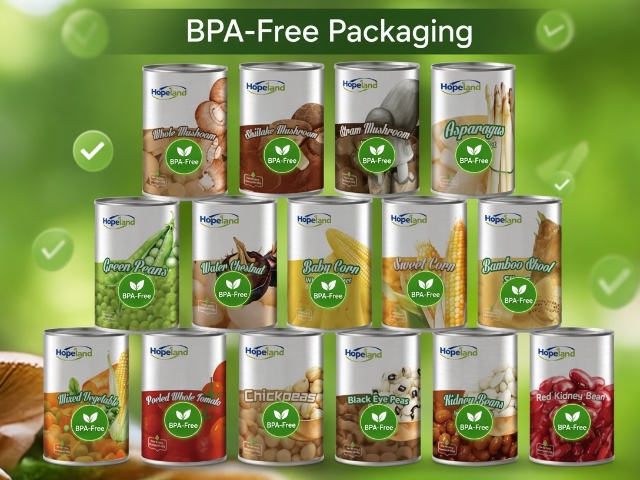
Canned foods offer unique advantages: long shelf life without refrigeration, retention of nutrients, convenience, and accessibility. At Amoytop Foods, our products—canned sweet corn, baby corn, water chestnuts, lychees, pineapple, peaches, tuna, mackerel, sardines, bamboo shoots, mushrooms, and more—are designed to deliver fresh-tasting, nutritious ingredients year-round. The integrity of the packaging is critical to maintaining that quality and safety.
Traditional BPA epoxy linings performed well technically: they adhered strongly, resisted corrosion from acidic or salty foods, and withstood the high temperatures of the canning process. Moving away from them required significant research and investment by the can-coating industry. The new linings must still protect food quality, prevent metal contamination, and remain stable under processing and storage conditions. Not every alternative works equally well for every product (high-acid fruits and tomatoes, for example, are more demanding).
Choosing BPA-free packaging responds to several important factors:
1. Consumer preference and trust — Many shoppers actively look for the BPA-Free label as a signal of safer packaging.
2. Regulatory trends — The EU ban and ongoing reviews elsewhere push the global supply chain toward alternatives.
3. Vulnerable populations — Pregnant women, infants, and young children are considered more sensitive to endocrine disruptors.
4. Brand responsibility — Responsible manufacturers continuously evaluate packaging materials against the latest science and market expectations.
At the same time, “BPA-Free” should be viewed as one element of a broader safety approach rather than a complete guarantee. Overall product safety also depends on raw-material quality, manufacturing hygiene (HACCP, ISO, BRC, and similar standards), proper processing, and accurate labeling.
Practical Steps for Consumers
If reducing potential BPA exposure is a priority, consider these practical measures:
· Look for products explicitly labeled BPA-Free.
· Prefer glass jars or retort pouches for highly acidic foods when available.
· Diversify food sources—combine canned, fresh, frozen, and dried options.
· Avoid heating food in plastic containers not designed for high temperatures.
· Check manufacturer websites or contact suppliers for more details on packaging.
For canned goods specifically, many major brands have already transitioned. When in doubt, inquire about the lining type.
Amoytop Foods’ Commitment to Quality and Safety
As a company founded in 2009 with production facilities in Zhangzhou and Dangshan, China, Amoytop Foods has built its reputation on honesty, credibility, cooperation, and win-win partnerships. We supply canned vegetables, fruits, seafood, and edible fungi to customers worldwide under our HOPELAND and FRESHSMILE brands. Our focus is consistent quality, reliable supply, and continuous improvement.
We monitor global regulatory developments and industry best practices regarding packaging materials. Food safety certifications and rigorous quality control form the foundation of our operations. We understand that packaging is not merely a container—it is part of the product experience and a key factor in consumer confidence.
The shift toward BPA-free can linings reflects a larger movement in the food industry: greater transparency, responsiveness to scientific evidence, and alignment with evolving consumer values. While no packaging material is perfect, the industry’s progress in reducing reliance on BPA-based epoxies represents meaningful advancement.
Looking Ahead
Science continues to evolve. Ongoing research into alternative coatings, migration levels, and long-term health effects will further refine our understanding. Regulatory frameworks in different regions will continue to adapt. Manufacturers who invest in safer, better-characterized materials and communicate openly with customers will be best positioned for the future.
“BPA-Free” is more than a marketing phrase. It signals a response to legitimate questions about chemical migration from packaging into food. For the canned-food sector, it represents both a technical challenge and an opportunity to strengthen trust. At Amoytop Foods, we remain committed to delivering products that meet high standards of safety, quality, and reliability—so that families around the world can enjoy convenient, nutritious canned foods with confidence.
Whether you are a retailer, foodservice operator, or home consumer, understanding packaging labels empowers better choices. BPA-Free is one important piece of that picture. Combined with careful sourcing, proper processing, and transparent practices, it helps ensure that the foods we rely on remain both practical and trustworthy for years to come.