

Introduction: Why EU Compliance Matters More Than Ever for Canned Food Imports
The European canned food market continues to offer strong opportunities for importers, distributors, supermarkets, and private-label brands. Products such as canned peaches, fruit cocktail, bamboo shoots, sweet corn, mushrooms, tomato paste, tuna, and sardines remain popular among European consumers because of their long shelf life, convenience, and stable supply.
However, entering the European market requires more than competitive pricing and reliable production capacity. In 2026, EU food import compliance has become one of the most important factors that determine whether an overseas supplier can successfully build long-term cooperation with European buyers.
For canned food importers, compliance issues related to food safety, labeling, traceability, packaging materials, pesticide residue limits, and documentation can directly affect customs clearance, market access, and brand reputation.
The European Union applies strict requirements to imported food products to ensure that products entering the market meet the same safety standards as foods produced within the EU.
For buyers sourcing canned food from overseas suppliers, understanding these requirements before placing orders can reduce risks and avoid costly delays.
1. EU Food Safety Requirements for Imported Canned Foods
Food safety is the first priority for European authorities.
Whether importing canned fruits, canned vegetables, or canned seafood, suppliers must demonstrate that their products are manufactured under controlled food safety systems.
European buyers normally expect suppliers to provide:
· HACCP food safety management system
· BRCGS or equivalent certification
· ISO 22000 / ISO 9001 certification
· Product specifications
· Laboratory test reports
· Traceability documents
· Production records
A professional canned food manufacturer should be able to control the entire production process, including:
· Raw material selection
· Washing and sorting
· Processing and filling
· Thermal sterilization
· Metal detection
· Final inspection
· Shipment approval
For low-acid canned products such as certain vegetables and seafood products, strict thermal processing control is especially important because incorrect sterilization can create food safety risks.
European import controls are designed to prevent unsafe products, contamination risks, and non-compliant foods from entering the market.
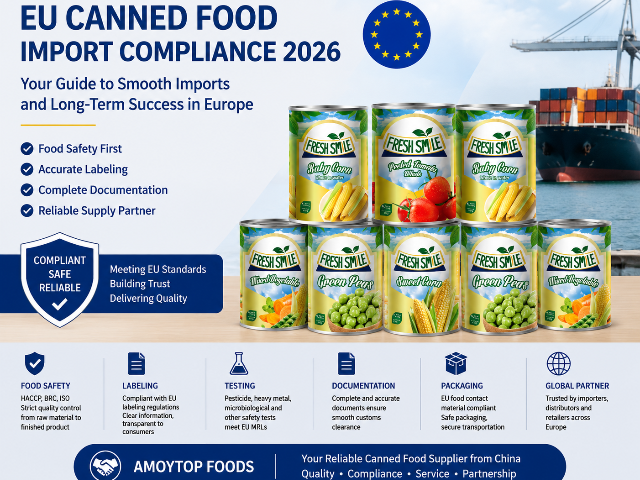
2. EU Canned Food Labeling Requirements in 2026
Correct labeling is one of the most common challenges faced by exporters.
Before shipping canned food to Europe, suppliers and importers should confirm that product labels meet EU requirements.
The label usually needs to include:
Product Name
The product description must accurately represent the food.
Examples:
· Canned Yellow Peaches in Syrup
· Canned Fruit Cocktail
· Canned Bamboo Shoots in Brine
· Canned Tuna in Brine
Misleading descriptions may create compliance issues.
Ingredient List
All ingredients must be clearly declared.
For example:
Ingredients:
Peaches, water, sugar.
For products containing additives, the relevant EU requirements must also be followed.
Nutrition Information
EU regulations require pre-packaged foods sold in the EU to provide nutrition declarations, including information such as:
· Energy
· Fat
· Carbohydrates
· Sugars
· Protein
· Salt
This information helps consumers make informed purchasing decisions.
Country of Origin
The origin information should be accurate and consistent with import documents.
For example:
Origin: China
Importer Information
Products entering the EU market usually require the responsible food business operator or importer information on the packaging.
European private-label customers often request customized labels that match their local market requirements.
3. Maximum Residue Limits (MRLs) and Testing Requirements
One of the biggest concerns for European food buyers is pesticide residue compliance.
For canned fruits and vegetables, buyers increasingly request:
· Pesticide residue testing
· Heavy metal testing
· Microbiological analysis
· BPA-related packaging compliance documents
Products such as:
· Canned peaches
· Canned pears
· Canned mushrooms
· Canned bamboo shoots
· Canned sweet corn
must come from controlled agricultural sources.
A reliable supplier should maintain:
· Approved farming areas
· Raw material inspection procedures
· Supplier evaluation systems
· Batch traceability
This is especially important for European supermarket customers, where product recalls can seriously damage brand reputation.
4. Packaging Compliance for Canned Food Imports
Packaging is another important compliance area.
European buyers pay attention not only to the food inside the can but also to packaging safety.
Common requirements include:
Food Contact Material Compliance
Materials that directly contact food must comply with EU food contact regulations.
This includes:
· Tinplate cans
· Can coatings
· Glass jars
· Plastic packaging materials
Packaging Quality Control
Exporters should ensure:
· No leakage
· No swelling cans
· No serious dents
· Proper vacuum control
· Correct sealing performance
For canned products, packaging quality directly affects shelf life and consumer confidence.
5. Required Documents for EU Canned Food Import
A smooth import process depends on complete documentation.
Common documents include:
Commercial Documents
· Commercial Invoice
· Packing List
· Sales Contract
· Bill of Lading
Product Documents
· Product Specification
· Ingredient Statement
· Nutrition Facts
· Certificate of Analysis (COA)
· Health Certificate (when applicable)
Quality Documents
· HACCP Certificate
· BRC Certificate
· ISO Certificate
· Factory Audit Reports
European importers often prefer suppliers who can provide complete documentation quickly because missing documents may delay customs clearance.
6. Customs Control and Border Inspection in the EU
Imported food products may be subject to official controls when entering the EU.
Authorities may check:
· Documentation
· Product identity
· Physical condition
· Compliance with food safety rules
The EU operates official control systems to ensure imported food meets safety requirements before entering the market.
For non-compliant shipments, possible consequences include:
· Shipment delays
· Additional testing costs
· Rejection at customs
· Product recall
· Financial losses
Therefore, choosing an experienced supplier is essential.
7. How European Buyers Should Select a Reliable Canned Food Supplier
For European importers, the lowest price is not always the best choice.
A reliable supplier should offer:
Stable Raw Material Supply
For canned fruits and vegetables, seasonal raw materials directly affect quality.
A professional supplier should have:
· Long-term farmer cooperation
· Strict maturity control
· Color and size selection
Strong Quality Management
Buyers should check:
· Factory certificates
· Production capacity
· Previous export experience
· Customer references
Flexible OEM and Private Label Capability
Many European distributors and supermarket chains require customized products.
A qualified supplier should support:
· Private label cans
· Customized labels
· Different sizes
· Special recipes
· Retail packaging
8. Why Choose AMOYTOP Foods for EU Canned Food Import Projects?
AMOYTOP Foods specializes in manufacturing and exporting canned food products for global markets.
Our product range includes:
· Canned Yellow Peaches
· Canned Fruit Cocktail
· Canned Pears
· Canned Lychee
· Canned Bamboo Shoots
· Canned Sweet Corn
· Canned Mushrooms
· Tomato Paste
· Canned Tuna and Sardines
We understand that European buyers need more than products — they need a reliable supply partner who understands compliance, quality control, and market requirements.
Our advantages include:
Professional Production Management
We control every step from raw materials to finished products.
Export Experience
We cooperate with international distributors, wholesalers, and private-label customers.
Complete Documentation Support
We provide necessary technical documents to help customers complete import procedures smoothly.
OEM Capability
We support customized packaging, labels, and specifications according to different European markets.
Conclusion: Compliance Creates Long-Term Opportunities in the EU Canned Food Market
The European canned food market remains attractive, but successful import business requires strict attention to compliance.
In 2026 and beyond, European buyers will increasingly focus on:
· Food safety
· Transparent supply chains
· Accurate labeling
· Product testing
· Reliable manufacturing partners
For importers and distributors, working with a professional canned food manufacturer can significantly reduce risks and create long-term business opportunities.
A supplier who understands EU requirements is not only a product provider but also a valuable partner for building a successful food brand in Europe.