

Canned sardines are one of the most convenient seafood products available today. They are affordable, nutritious, easy to store, and ready to eat without complicated preparation. From family meals and sandwiches to salads, pasta, and traditional recipes, canned sardines have become a popular choice in households and foodservice markets around the world.
But with so many brands, origins, fish species, sauces, can sizes, and processing methods available, an important question remains: What are considered good canned sardines?
Good canned sardines are not simply determined by the appearance of the label or the price of the product. High-quality canned sardines should combine suitable raw materials, good fish condition, proper processing, attractive appearance, pleasant texture, balanced flavor, safe packaging, and reliable nutritional and quality standards.
For consumers, importers, distributors, and retailers, understanding these factors can make it much easier to identify canned sardines that offer consistent quality and good value.
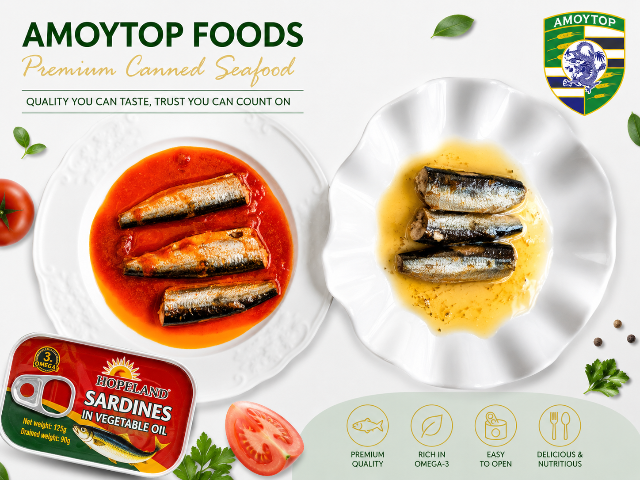
1. High-Quality Fresh Raw Materials Come First
The quality of canned sardines begins with the fish itself.
Sardines are generally small oily fish belonging to several related species. Depending on the market and fishing area, different sardine species may be used for canning. The species, fishing grounds, season, and maturity of the fish can all influence the final product.
Fresh and properly handled raw materials are essential. Sardines should be processed as soon as reasonably possible after landing to maintain their freshness and quality. Poorly handled fish can develop undesirable odors, soft texture, discoloration, or other quality problems before they even enter the processing line.
Good sardines should have a natural fish appearance, clean flavor, and firm but tender flesh after cooking.
The condition of the raw fish is especially important because canning is not a process that can transform poor-quality raw material into premium-quality seafood. Careful selection at the beginning is therefore one of the most important factors in producing high-quality canned sardines.
2. The Fish Should Have a Pleasant Natural Appearance
Appearance is one of the first things buyers notice when opening a can.
Good canned sardines should generally have a clean, natural appearance. The fish should maintain its recognizable shape, with the skin and flesh showing an appropriate color for the species and processing style.
Depending on the product specification, sardines may be packed whole, cleaned and headed, or prepared in other formats. The fish should be neatly arranged in the can, with an appropriate filling ratio and minimal unnecessary damage.
Some minor differences in color or shape can occur naturally because sardines are agricultural and marine products. However, excessive bruising, broken pieces, abnormal discoloration, or obvious deterioration may indicate problems with raw material quality or processing.
For private-label and retail products, attractive presentation is particularly important because consumers often judge the product visually before tasting it.
3. Good Canned Sardines Should Have a Firm, Tender Texture
Texture is another major quality indicator.
High-quality canned sardines should be cooked sufficiently to become tender while still retaining their structure. The flesh should not be excessively hard, dry, mushy, or broken into small pieces.
A good sardine should generally separate easily from the bone while maintaining enough firmness to remain attractive when served.
Overprocessing can negatively affect texture. Excessive heating may cause the flesh to become too soft or dry, while insufficient processing can affect the desired eating quality and, more importantly, food safety.
Therefore, commercial canned sardine production requires carefully controlled cooking and sterilization conditions.
For buyers evaluating samples, texture should be checked immediately after opening the can. Consider whether the fish maintains its shape, whether the flesh separates naturally, and whether the mouthfeel is tender and pleasant.
4. The Flavor Should Be Clean and Balanced
Flavor is one of the clearest differences between average and good canned sardines.
Quality sardines should have a clean, characteristic seafood flavor without strong rancid, sour, bitter, chemical, or unpleasant odors.
The final flavor also depends on the packing medium.
Sardines may be packed in tomato sauce, oil, brine, or other sauces depending on the market and product specification. The packing medium should complement the fish rather than overpower its natural flavor.
For sardines in tomato sauce, for example, the sauce should have a pleasant tomato flavor and balanced seasoning. For sardines in oil, the oil should be clean and appropriate for the product. For sardines in brine, the saltiness should be balanced rather than excessively strong.
Good canned sardines should provide a pleasant taste from the first bite through the end of the meal.
5. The Smell Should Be Fresh and Characteristic
Smell is an important quality indicator that should never be overlooked.
When a can of sardines is opened, there will naturally be a seafood aroma. This is normal. However, the smell should be clean and characteristic of the product.
A strong rancid smell, sour odor, ammonia-like smell, or other abnormal odor may indicate quality deterioration or inappropriate storage conditions.
Because sardines contain relatively high levels of natural oils, proper handling and storage are especially important. Exposure to unsuitable temperatures, oxygen, light, or extended storage conditions can negatively affect oil quality and flavor.
This is why both manufacturers and distributors need to pay attention to storage conditions throughout the supply chain.
6. Good Canned Sardines Should Have Appropriate Oil and Sauce
The packing medium is an important part of the eating experience.
For sardines packed in oil, the oil should have an acceptable appearance, flavor, and aroma. The amount of oil should also be appropriate for the declared product specification.
For sardines in tomato sauce, the sauce should have a consistent color and texture, with good distribution throughout the can.
The sauce should not be excessively watery or unusually thick unless this is part of the agreed specification.
For products packed in brine, the brine should provide appropriate saltiness and should not dominate the flavor of the fish.
For export products, buyers often specify detailed requirements for the type of oil, sauce formulation, salt level, fish-to-sauce ratio, drained weight, and other parameters. These specifications should be confirmed before production.
7. The Fish-to-Filling Ratio Matters
When purchasing canned sardines, consumers often focus on the net weight printed on the label. However, net weight alone does not tell the complete story.
The drained weight is also important.
For example, two cans may both have the same net weight, but one may contain more fish and less sauce or oil, while the other contains more liquid. The actual amount of fish available to the consumer can therefore be different.
A reliable canned sardine product should have consistent net weight and drained weight according to its specification.
For importers and distributors, drained weight is particularly important when comparing products from different suppliers. It allows buyers to evaluate the actual seafood content rather than simply comparing the total weight of the can.
8. The Bones Should Be Properly Processed
Bones are a natural part of sardines, and canned sardines are often packed with their edible bones.
During the canning process, controlled heat treatment softens the bones, making them suitable for consumption in properly processed products. This is also one reason sardines are recognized as a useful source of calcium.
Good canned sardines should have bones that are sufficiently softened through appropriate processing.
Consumers should still follow the product's intended preparation and handling instructions. Manufacturers must also ensure that processing conditions meet applicable food safety requirements.
The presence of naturally occurring bones is therefore not necessarily a quality problem. Instead, the key is whether the bones have been properly processed and whether the product meets the agreed safety and quality specifications.
9. The Can Should Be in Excellent Condition
Packaging quality is another important part of canned sardine quality.
A good can should be clean, properly sealed, and free from obvious damage. There should be no significant dents around critical sealing areas, leakage, swelling, rust, or other abnormalities.
The canning process depends on a reliable hermetic seal to protect the product from contamination and maintain shelf stability.
Easy-open lids are also increasingly popular in modern canned seafood markets. They provide convenience for consumers and eliminate the need for a separate can opener.
However, easy-open packaging must still meet appropriate sealing and mechanical performance requirements.
For export orders, packaging specifications should cover can dimensions, lid type, carton packing, labeling, palletization, and other requirements.
10. Consistency Is a Key Sign of Professional Quality
One can of good sardines is not enough.
For commercial buyers, consistency from batch to batch is one of the most important quality indicators.
A professional supplier should be able to maintain relatively consistent fish size, appearance, texture, taste, filling ratio, sauce quality, and packaging performance throughout production.
This is especially important for supermarkets, distributors, restaurant chains, and private-label customers.
Consumers expect the product they purchase next month to provide a similar experience to the product they purchased today.
Quality control therefore needs to cover the entire production process, from raw material selection and preparation to filling, sealing, sterilization, cooling, storage, and final inspection.
11. Food Safety Should Always Come Before Appearance
While appearance and taste are important, food safety is the fundamental requirement for any canned seafood product.
Commercial canned sardines should be manufactured under controlled food safety systems and comply with applicable regulations in the destination market.
Proper thermal processing is particularly important for shelf-stable canned foods. The sterilization process must be scientifically established and carefully controlled according to the product, packaging format, and processing conditions.
Manufacturers may also operate under internationally recognized food safety and quality management systems such as HACCP, ISO, BRCGS, or other applicable standards.
For importers, asking suppliers about certifications, production facilities, laboratory testing, traceability, and quality control procedures can provide valuable information when evaluating a new supplier.
12. Nutritional Value Is Another Advantage
Sardines are naturally nutrient-rich fish.
They are known as a source of high-quality protein and contain naturally occurring omega-3 fatty acids. Sardines can also provide important nutrients such as vitamin B12 and minerals including calcium, particularly when edible bones are included and properly processed.
The exact nutritional profile varies according to fish species, raw material, packing medium, serving size, and formulation.
This makes canned sardines attractive to consumers who are looking for convenient seafood options as part of a balanced diet.
For commercial products, accurate nutrition information should be determined according to the applicable regulations and the actual product formulation.
13. Good Canned Sardines Should Have Reliable Shelf Stability
Shelf stability is one of the major advantages of canned sardines.
Unlike fresh fish, properly manufactured canned sardines can be stored for an extended period without refrigeration before opening, provided that the product remains unopened and is stored according to the manufacturer's recommendations.
However, shelf stability depends on correct processing, packaging integrity, and storage conditions.
Cans should be stored in a clean, dry environment and protected from excessive heat, moisture, and physical damage.
For international trade, long shelf life is particularly valuable because products may spend considerable time in warehouses, shipping containers, distribution centers, and retail stores.
14. What Should Importers Look for When Buying Canned Sardines?
For importers and distributors, choosing a canned sardine supplier involves more than tasting a sample.
A professional purchasing evaluation should consider several factors:
Raw material: What species is used? Where are the fish sourced? How are they handled after landing?
Product specification: What are the net weight, drained weight, fish size, packing medium, and formulation?
Processing: Does the factory have controlled cooking, filling, sealing, sterilization, and cooling procedures?
Quality control: Are finished products inspected and tested before shipment?
Packaging: Are the cans, lids, cartons, labels, and pallet arrangements suitable for the destination market?
Certifications: Does the factory have the certifications required by the buyer or importing country?
Consistency: Can the supplier maintain the same quality across multiple production batches?
Private label: Can the manufacturer provide OEM or private-label packaging if required?
Export experience: Does the supplier have experience shipping canned seafood to international markets?
These questions can help buyers distinguish between a supplier that simply offers a low price and a supplier that can provide dependable long-term cooperation.
15. Price Is Important, But It Should Not Be the Only Standard
A low price can be attractive, especially in highly competitive food markets. However, the cheapest canned sardines are not necessarily the most economical choice.
If the product has inconsistent quality, poor texture, excessive sauce, damaged packaging, or frequent customer complaints, the actual cost can become much higher.
Returns, complaints, lost shelf space, damaged brand reputation, and customer dissatisfaction can all create additional expenses.
A better approach is to evaluate quality, specifications, price, packaging, certifications, service, and supply reliability together.
The best supplier is often the one that provides consistent quality at a competitive and sustainable price.
16. How Can You Identify Good Canned Sardines at Home?
For consumers, a simple evaluation can be made by checking several things.
First, examine the can before opening it. Avoid products with severe dents, swelling, leakage, or serious rust.
Next, check the label for the product name, ingredients, net weight, drained weight where applicable, origin, manufacturer information, lot or batch identification, and expiry or best-before information as required by the market.
After opening, observe the fish. Does it maintain its shape? Does it have a normal color? Does it smell clean?
Then taste a small portion. Good sardines should have pleasant flavor and appropriate texture without obvious rancidity or abnormal bitterness.
These simple checks can help consumers identify products that meet their expectations.
Conclusion
So, what are considered good canned sardines?
Good canned sardines are the result of many factors working together. They begin with carefully selected and properly handled fish and continue through controlled processing, reliable packaging, appropriate sterilization, quality inspection, and proper storage.
A high-quality product should generally offer:
· Fresh and suitable raw materials
· Clean and natural appearance
· Firm yet tender texture
· Pleasant seafood flavor
· Clean aroma
· Appropriate fish-to-sauce or fish-to-oil ratio
· Consistent net and drained weight
· Properly softened edible bones
· Strong and reliable can sealing
· Safe and controlled processing
· Good shelf stability
· Accurate labeling and traceability
· Consistent quality from batch to batch
For consumers, these characteristics help create a better eating experience. For importers, distributors, retailers, and foodservice buyers, they are essential for building a reliable product line and maintaining customer satisfaction.
Ultimately, good canned sardines are not defined by one single feature. The combination of raw material quality, processing technology, food safety, taste, texture, packaging, consistency, and value is what makes a canned sardine product truly competitive.
As global demand for convenient and nutritious seafood continues to grow, high-quality canned sardines remain an excellent option for modern consumers and an attractive product category for international food businesses.