

One Species Can Cover More Than One Shelf Position
Sardines make that point pretty well.
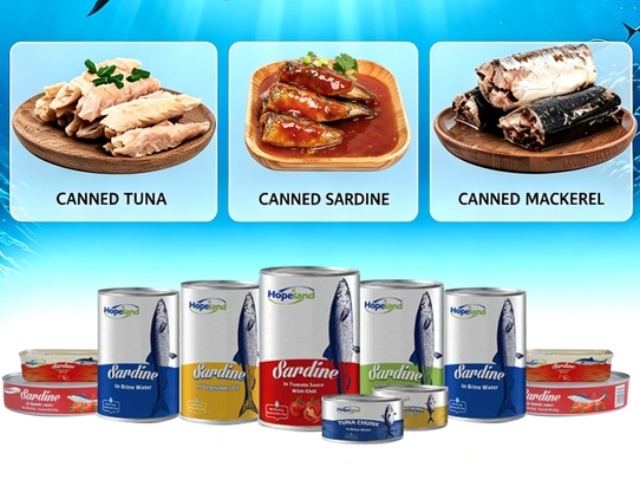
The 425g canned sardines in tomato sauce and the 125g canned sardines in vegetable oil already create two distinct directions.
One is a larger tomato-based format.
The other is smaller and oil-packed.
That difference matters more than it may seem at first glance.
We have noticed that buyers often think about variety only in terms of species. Sardines here, mackerel there, tuna somewhere else. But pack size and packing medium can create just as much separation between SKUs.
Amoytop Foods also describes sardines packed in brine water, olive oil and sunflower oil.
So even before a buyer moves into mackerel or tuna, there is already room to build several sardine products around different pack formats and packing media.
That can be useful for a retailer that wants a more coherent range instead of a random mix of fish species.
Why 425g Tomato Sardines and 125g Oil Sardines Should Not Be Compared Directly
This is where spreadsheets can become misleading.
Put both sardine products in the same row, add a price column, and the comparison looks tidy.
Too tidy.
The 425g canned sardines in tomato sauce and the 125g canned sardines in vegetable oil differ in both weight and packing medium. We would want those differences understood before anybody started judging which quote looked better.
The product description for the 125g sardines highlights protein, omega-3 fatty acids, calcium, Vitamin D, Vitamin B12, selenium and phosphorus. The calcium comes from the bones. Vegetable oil also contributes to flavor and texture.
The page gives some context for other packing media as well.
Sardines packed in water retain the fish's basic natural fatty-acid ratio while keeping fat lower. Tomato sauce products contain more salt, while the acidity of the tomato sauce helps preserve B vitamins.
So no, the sauce or oil is not just an extra line in the specification.
It changes the product.
That is why we prefer the full wording canned sardines in tomato sauce rather than shortening everything to “sardines” once the buying process begins.
Where Mackerel in Brine Fits
Mackerel can solve a different assortment problem.
Amoytop Foods lists Canned Mackerel in Brine Water and also describes mackerel packed in tomato sauce, vegetable oil, olive oil and sunflower oil.
The page describes mackerel as a firm-fleshed sea fish and an excellent source of omega-3 fatty acids. It also notes that fresh mackerel spoils quickly.
Now imagine the buyer already has an oil-packed sardine SKU.
Would another oil-packed fish automatically make sense?
Maybe. Maybe not.
In some assortments, mackerel in brine gives the range more contrast. The buyer gets another fish species and a different packing style at the same time.
In another market, mackerel in oil may fit better.
We would make that choice after looking at the whole shelf, not just the mackerel product in isolation.
That is the part that often gets missed.
Tuna Chunks in Oil Adds a Different Product Role
Tuna brings another variable into the discussion: presentation.
Amoytop Foods lists Canned Tuna Chunks In Oil.
The page describes canned tuna as protein-packed, economical and suitable for long pantry storage. It also highlights omega-3 content.
The word chunks deserves attention.
It tells the buyer what form the tuna takes inside the can. That sounds like a small detail until two tuna products are being compared and the presentations are different.
So we would keep the full product name.
Canned tuna chunks in oil.
Clear enough.
The page also associates the tuna item with terms such as tuna in olive oil, canned tuna chunk, tuna in a can, tin of tuna and tuna fish in olive oil.
Those variations can help with search coverage, but we would not let them clutter the buying discussion.
The buyer needs the actual SKU first.
Everything else comes later.
What I Would Put on the Buyer's Comparison Sheet
We would keep the first comparison sheet surprisingly simple.
No twenty-column monster.
At the beginning, four fields are enough:
Fish species.
Packing medium.
Pack weight where it is provided.
Presentation.
Using the Amoytop Foods range, the shortlist could read:
425g canned sardines in tomato sauce
125g canned sardines in vegetable oil
Canned Mackerel in Brine Water
Canned Tuna Chunks In Oil
That already tells us much more than four rows labeled sardines, sardines, mackerel and tuna.
Once the products are properly separated, then it makes sense to add the commercial information that comes later in the quotation process.
We have seen buyers do this the other way around and end up comparing prices for products that are not actually equivalent.
That is an easy mistake to avoid.
A Short Buying Note Before Sending the RFQ
The first email does not need to sound impressive.
It needs to be specific.
For sardines, something like this works:
“We are reviewing your 425g canned sardines in tomato sauce and 125g canned sardines in vegetable oil. Please send the specifications for both products.”
For mackerel:
“We are interested in your canned mackerel in brine water and would also like details on the oil-packed mackerel options.”
For tuna:
“Please send the specification for your canned tuna chunks in oil.”
That is enough to get the conversation moving.
We would avoid opening with “Please quote canned fish.”
Why? Because once the buyer reaches the product page, canned fish is too broad to be useful as a purchasing description.
At that stage, the SKU matters more.
Final Thoughts
A canned fish range does not need to follow a neat one-species-one-SKU formula.
The Amoytop Foods products show that pretty clearly.
A 425g sardine in tomato sauce and a 125g sardine in vegetable oil can sit in very different positions even though both use sardines.
Mackerel in brine adds another packing style.
Canned tuna chunks in oil brings another species and another presentation.
We would start with the role each product needs to play, then check the species, packing medium, weight and presentation.
That gives the buyer a much better shortlist than simply choosing three different fish and calling the range complete.
FAQ
1. What canned fish species are shown by Amoytop Foods?
The range includes sardines, mackerel and tuna.
2. What packing media are described for sardines?
Amoytop Foods describes sardines in tomato sauce, brine water, vegetable oil, olive oil and sunflower oil.
3. What are the two sardine pack sizes mentioned on the page?
The page lists 425g canned sardines in tomato sauce and 125g canned sardines in vegetable oil.
4. What nutrients are highlighted for the 125g sardines in vegetable oil?
The description mentions protein, omega-3 fatty acids, calcium, Vitamin D, Vitamin B12, selenium and phosphorus. The calcium comes from the bones.
5. Does Amoytop Foods offer mackerel in brine?
Yes. The page lists Canned Mackerel in Brine Water and also refers to mackerel in tomato sauce and several oils.
6. What tuna product is shown?
The listed product is Canned Tuna Chunks In Oil. The word “chunks” identifies the presentation, so we would keep it in the buying specification.