

Canned whole peeled tomatoes are one of the most versatile and convenient ingredients you can keep in your pantry. Made from ripe tomatoes that are peeled and preserved, they provide the rich flavor, natural acidity, vibrant color, and soft texture needed for countless recipes. From classic Italian pasta sauces and hearty soups to pizza toppings, stews, casseroles, and homemade salsa, canned whole peeled tomatoes can transform simple ingredients into satisfying meals.
For busy households, restaurants, food manufacturers, and professional chefs, their biggest advantage is consistency. Unlike fresh tomatoes, which vary according to season, variety, ripeness, and growing conditions, canned whole peeled tomatoes offer a reliable ingredient throughout the year.
But what exactly makes them such a pantry must-have? How are they produced? Are they as nutritious as fresh tomatoes? And how can you choose the right product for your kitchen or food business?
Let's take a closer look.
What Are Canned Whole Peeled Tomatoes?
Canned whole peeled tomatoes are generally made from ripe tomatoes that are harvested, washed, peeled, packed into cans, and preserved through heat processing. The tomatoes are usually packed in tomato juice, tomato purée, or a combination of tomato juice and other ingredients, depending on the product specification.
The word "whole" means that the tomatoes are preserved largely intact rather than being chopped or crushed before canning. "Peeled" means the skin has been removed, creating a smooth texture that works particularly well in sauces, soups, and other cooked dishes.
When you open a can, you can use the tomatoes exactly as they are, crush them by hand, cut them with a knife, blend them into a smooth sauce, or cook them slowly to develop a deeper flavor.
This flexibility is one of the main reasons whole peeled tomatoes are so popular among home cooks and foodservice professionals.

Why Are Whole Peeled Tomatoes So Popular?
Fresh tomatoes are excellent ingredients, but they are not always practical.
Fresh tomatoes have a limited shelf life and can deteriorate quickly if they are not stored properly. Their flavor and texture can also change depending on the season. In contrast, canned whole peeled tomatoes are processed at their peak ripeness and sealed in a protective container.
This provides several important benefits.
1. Year-Round Availability
One of the biggest advantages of canned tomatoes is availability.
Fresh tomatoes can be affected by weather, transportation, seasonal production, and local supply. Canned whole peeled tomatoes allow consumers and food businesses to enjoy tomato-based dishes throughout the year without relying entirely on fresh seasonal produce.
For restaurants and manufacturers, this consistency can make menu planning and production much easier.
2. Convenient and Ready to Use
Canned whole peeled tomatoes eliminate several preparation steps.
With fresh tomatoes, you may need to wash them, remove the stems, blanch them, peel them, and chop them before cooking. With canned whole peeled tomatoes, much of this preparation has already been completed.
Simply open the can, drain or retain the liquid depending on your recipe, and start cooking.
This is especially valuable when preparing large quantities of food.
3. Consistent Quality
Canned products are manufactured according to defined specifications. Factors such as tomato size, color, texture, net weight, drained weight, acidity, and packaging can be controlled during production.
This makes canned whole peeled tomatoes particularly useful for commercial kitchens and food manufacturers that require consistent results from batch to batch.
4. Long Shelf Life
Properly processed and sealed canned tomatoes can remain stable for a long time when stored under suitable conditions.
This makes them ideal for pantry storage. Instead of worrying about using fresh tomatoes within a few days, you can keep canned tomatoes available for future meals.
A well-stocked pantry with canned whole peeled tomatoes means that a simple tomato-based meal is always within reach.
How Are Canned Whole Peeled Tomatoes Made?
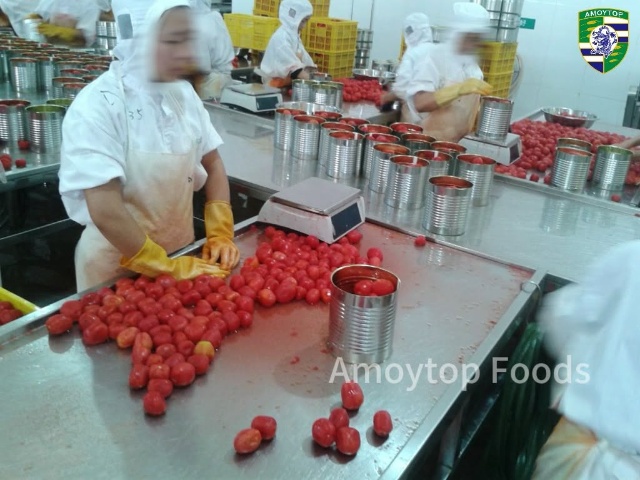
The production process is carefully controlled to maintain quality and food safety.
Although processing methods can vary between manufacturers, the basic process generally includes several stages.
Step 1: Tomato Selection
The process begins with selecting suitable tomatoes. Ripe, healthy tomatoes are preferred because maturity has a major influence on flavor, color, texture, and overall product quality.
Manufacturers may establish specifications for size, maturity, color, and defects.
Step 2: Washing
The tomatoes are thoroughly washed to remove dirt and other surface contaminants.
Proper cleaning is an important part of maintaining food safety and product quality.
Step 3: Peeling
The tomato skins are removed, commonly using controlled heat or mechanical methods.
Removing the skin gives canned whole peeled tomatoes their characteristic smooth texture and makes them more convenient for cooking.
Step 4: Sorting and Inspection
After peeling, tomatoes can be inspected and sorted to remove unsuitable pieces.
Quality control helps ensure that the finished product meets the manufacturer's specifications.
Step 5: Filling
The whole peeled tomatoes are placed into cans together with tomato juice, purée, or another appropriate packing medium.
The cans are filled according to the required net weight and product specification.
Step 6: Sealing and Heat Processing
The cans are hermetically sealed and subjected to controlled heat processing.
This step is critical for food safety and shelf stability. Proper thermal processing helps control microorganisms and creates a commercially stable canned product.
Step 7: Cooling and Inspection
After processing, the cans are cooled and inspected. Manufacturers may check can integrity, appearance, weight, labeling, and other quality parameters before the products are released.
The result is a convenient tomato product that can be transported, stored, and used throughout the year.
Are Canned Whole Peeled Tomatoes Nutritious?
Tomatoes are naturally rich in nutrients and plant compounds, and canned tomatoes can still contribute valuable nutrition to a balanced diet.
They provide nutrients such as vitamin C, vitamin K, potassium, and folate, although nutritional values vary depending on the tomato variety and processing method.
One particularly interesting compound found in tomatoes is lycopene, a naturally occurring carotenoid responsible for much of the tomato's red color.
Research has associated diets containing lycopene-rich foods with various potential health benefits. Interestingly, cooking and processing tomatoes can increase the availability of lycopene for absorption.
However, canned tomato products can differ significantly in sodium and added ingredients. Consumers who need to limit sodium should check the nutrition label and select suitable products.
The key point is that canned tomatoes can be a nutritious and convenient way to include tomatoes in everyday meals.
Canned Whole Peeled Tomatoes vs. Fresh Tomatoes
Does canned mean lower quality than fresh?
Not necessarily.
Fresh and canned tomatoes serve different purposes, and each has advantages.
Fresh tomatoes are excellent for salads, sandwiches, garnishes, and dishes where fresh texture is important. Canned whole peeled tomatoes, on the other hand, are particularly useful for cooked dishes.
For sauces and soups, canned tomatoes can actually be extremely convenient because they are already peeled and processed. Their consistent texture and flavor make them dependable ingredients for cooking.
The choice therefore depends largely on the recipe.
For a fresh summer salad, fresh tomatoes may be the better choice. For a slow-cooked pasta sauce in the middle of winter, canned whole peeled tomatoes can be an excellent option.
How to Use Canned Whole Peeled Tomatoes
One of the best things about canned whole peeled tomatoes is their versatility.
Pasta Sauce
Whole peeled tomatoes are a classic foundation for tomato-based pasta sauces.
Simply crush the tomatoes and cook them with olive oil, garlic, onions, herbs, and seasonings. Simmering allows the flavors to combine and the sauce to thicken.
You can keep the sauce simple or add vegetables, meat, seafood, or beans.
Pizza Sauce
Canned whole peeled tomatoes are also ideal for homemade pizza.
Blend or crush the tomatoes and combine them with herbs, garlic, olive oil, and seasonings. Because the tomatoes already have a concentrated flavor, they can create a flavorful pizza base without requiring complicated preparation.
Tomato Soup
For a comforting tomato soup, combine whole peeled tomatoes with onions, garlic, vegetable or chicken stock, and herbs. Simmer until the ingredients are tender and then blend until smooth.
Cream, milk, or plant-based alternatives can be added for a richer texture.
Stews and Casseroles
Whole peeled tomatoes can add acidity, moisture, color, and depth of flavor to stews and casseroles.
They work particularly well with beef, chicken, beans, lentils, and vegetables.
Shakshuka
Shakshuka is another excellent application. The tomatoes are cooked with onions, peppers, herbs, and spices before eggs are added.
The result is a simple but flavorful dish that works for breakfast, lunch, or dinner.
Salsa
Whole peeled tomatoes can also be blended or chopped to make homemade salsa.
Add onions, chili peppers, cilantro, lime juice, and seasonings according to your preference.
Tips for Cooking With Whole Peeled Tomatoes
To get the best results, consider how the tomatoes will be used.
If you want a rustic sauce, crush the tomatoes by hand or with a spoon.
For a smooth sauce, use a blender or food processor.
If your recipe requires a thicker sauce, simmer the tomatoes uncovered to allow excess water to evaporate.
For dishes where acidity needs to be balanced, ingredients such as onions, carrots, olive oil, or a small amount of sugar can help create a more rounded flavor.
Don't automatically discard the liquid in the can. Tomato juice can contain plenty of flavor and can be used in soups, sauces, and stews.
Choosing High-Quality Canned Whole Peeled Tomatoes
Not all canned tomatoes are identical. If you are buying canned whole peeled tomatoes for home use, foodservice, or wholesale distribution, several factors are worth considering.
Tomato Quality
Look for tomatoes with good color, appropriate maturity, and acceptable texture.
High-quality raw materials are the foundation of a good canned product.
Appearance
Whole peeled tomatoes should generally maintain their shape rather than becoming excessively broken or mashed.
The packing medium should also have an appropriate color and appearance.
Texture
Texture is important, especially for recipes where the tomatoes remain visible.
The tomatoes should be sufficiently tender for cooking but should not be unnecessarily mushy.
Ingredients
Check the ingredient list. Depending on the product, canned whole peeled tomatoes may contain tomatoes, tomato juice, salt, citric acid, or other permitted ingredients.
For specific dietary or customer requirements, always check the product specification carefully.
Packaging
The can should be clean, intact, and free from serious dents, rust, swelling, or leakage.
For commercial buyers, packaging specifications, case packing, pallet configuration, labeling, shelf life, and storage conditions should also be considered.
Why Canned Whole Peeled Tomatoes Are Valuable for Food Businesses
Canned whole peeled tomatoes are not only useful for home kitchens. They are also important ingredients for restaurants, caterers, hotels, foodservice companies, and food manufacturers.
Their long shelf life helps businesses maintain inventory without depending completely on fresh tomato supply.
Their consistent specifications also make production planning easier.
For example, a restaurant can use the same type of canned tomatoes for pasta sauce, pizza sauce, soup, and stew. A food manufacturer can incorporate them into ready meals, sauces, soups, and other processed foods.
For importers and distributors, canned whole peeled tomatoes can also be an attractive pantry staple because they have broad applications and appeal to different customer groups.
Storage and Handling
Unopened cans should generally be stored in a cool, dry place away from excessive heat and moisture.
After opening, any unused tomatoes should be transferred to a suitable food-safe container, refrigerated, and used within the recommended period.
Never use cans that are swollen, leaking, severely damaged, or otherwise suspicious.
Always follow the manufacturer's storage instructions and check the product's best-before or expiration information.
A Pantry Staple Worth Keeping
The modern kitchen needs ingredients that combine convenience, versatility, consistency, and value. Canned whole peeled tomatoes fit this role exceptionally well.
One can can become a pasta sauce, pizza topping, tomato soup, stew base, casserole ingredient, or homemade salsa. Because the tomatoes are already peeled and preserved, they reduce preparation time while providing reliable results.
They are also practical for food businesses because they offer predictable supply and convenient storage.
Perhaps the biggest advantage is their simplicity. You don't need an elaborate recipe to turn canned whole peeled tomatoes into a delicious meal. With a little olive oil, garlic, onions, herbs, and seasoning, you can create a flavorful sauce from a handful of basic ingredients.
Conclusion
Canned whole peeled tomatoes deserve their reputation as a pantry must-have.
They offer year-round availability, convenience, versatility, consistent quality, and long shelf life. Whether you're preparing dinner at home, running a restaurant, or sourcing ingredients for food manufacturing, they provide a practical way to enjoy the flavor and nutritional value of tomatoes without relying entirely on fresh produce.
From pasta and pizza to soups, stews, casseroles, and international dishes, their applications are almost endless.
For consumers, they are a smart ingredient to keep on hand. For professional kitchens and food businesses, they are a reliable staple that can simplify preparation and support consistent product quality.
When choosing canned whole peeled tomatoes, pay attention to raw material quality, tomato appearance, texture, ingredients, packaging, and supplier reliability. A well-made product can become one of the most useful ingredients in your pantry.
In short, when you have canned whole peeled tomatoes in your pantry, you're never too far away from a delicious meal.