How is Tomato Ketchup Made?
Introduction
Tomato ketchup, that ubiquitous red condiment found on tables worldwide, is more than just a sauce—it's a cultural staple. From dipping french fries to enhancing burgers, ketchup has become synonymous with comfort food. But how does this tangy, sweet elixir come to be? The process of making tomato ketchup involves a fascinating blend of agriculture, science, and industrial engineering. In factories around the world, millions of bottles are produced daily, transforming humble tomatoes into a shelf-stable product that lasts for months. This article delves into the intricate steps of ketchup production, exploring its history, ingredients, manufacturing process, equipment, quality controls, variations, and even a nod to homemade versions. By understanding the journey from farm to bottle, we gain appreciation for the precision and innovation behind this everyday item.
Ketchup's global appeal is staggering. According to industry estimates, over 650 million bottles of Heinz ketchup alone are sold annually, with the average American consuming about three bottles per year. Yet, despite its simplicity, the production process is a symphony of controlled steps designed to ensure consistency, safety, and flavor. Let's start by tracing its origins.
The History of Ketchup
The story of ketchup begins far from the tomato fields of today. The word "ketchup" derives from the Chinese term "ke-tsiap," referring to a fermented fish sauce used in ancient China as early as the 3rd century. This brine, made from pickled fish or shellfish, spread through trade routes to Southeast Asia, where it evolved with additions of herbs, spices, and sometimes soy. English sailors encountered variations in Malaysia and Singapore in the late 1600s, bringing the concept back to Europe. Without access to original ingredients, British cooks improvised, using mushrooms, walnuts, oysters, or even cucumbers to create early versions.
The tomato entered the picture in the 1700s when New Englanders experimented with it, leading to the tangy tomato-based sauce we recognize today. The first printed tomato ketchup recipe appeared in 1812 in Hannah Glasse's cookbook, marking a shift from fermented fish sauces to vegetable-based ones. Commercial production took off in the 19th century, with companies like H.J. Heinz pioneering innovations. Heinz introduced glass bottles sealed with cork and wax in the late 1800s, followed by screw caps and eventually plastic squeeze bottles. These advancements not only improved preservation but also made ketchup accessible to the masses.
By the 1870s, brands like Tabasco were producing ketchup commercially, but it was Heinz's focus on quality and marketing that cemented its dominance. The transition from manual, fermented methods to mechanized industrial processes emphasized high-temperature cooking for safety and efficiency. Today, ketchup has regional twists: sweet and tomato-heavy in the U.S., soy-infused in parts of Asia, or even banana-based in the Philippines. This evolution reflects how a simple sauce adapted to global tastes, setting the stage for modern manufacturing.
Key Ingredients in Tomato Ketchup
At its core, tomato ketchup is a harmonious blend of a few essential components, each playing a crucial role in flavor, texture, and preservation. The star ingredient is, of course, tomatoes—ripe, red ones selected for their color, flavor, and yield. Factories often use fresh tomatoes or concentrated tomato paste, which provides thickness and intensifies the natural sweetness.
Vinegar adds the signature tang and acts as a natural preservative by lowering the pH to inhibit bacterial growth. Sugar, typically granulated cane sugar or high-fructose corn syrup, balances the acidity, enhancing sweetness and contributing to the sauce's viscosity. Salt not only seasons the mix but also aids in preservation. Spices and flavorings bring depth: common ones include onion powder, garlic powder, allspice, cassia, cinnamon, cayenne, cloves, pepper, ginger, mustard, and paprika. These are added in precise ratios, often as whole spices for milder flavor or premixed for consistency.
Some recipes incorporate thickeners like pectin, xanthan gum, or starch for lower-solids versions, ensuring the sauce clings perfectly to food. Water is used to dilute concentrated paste, and natural preservatives like clove help prevent microbial spoilage without artificial additives. Brands like Heinz emphasize natural ingredients, avoiding artificial colors or flavors to appeal to health-conscious consumers. The exact proportions vary by brand—Heinz's "secret spice blend" is a closely guarded recipe—but the goal is always a balanced, umami-rich profile.
The Manufacturing Process: Step by Step
The industrial production of tomato ketchup is a streamlined, 2-3 hour process that transforms raw tomatoes into a bottled product. While details vary by manufacturer, the core steps are similar across factories like those of Heinz and Red Gold.
1. Sourcing and Preparation of Tomatoes
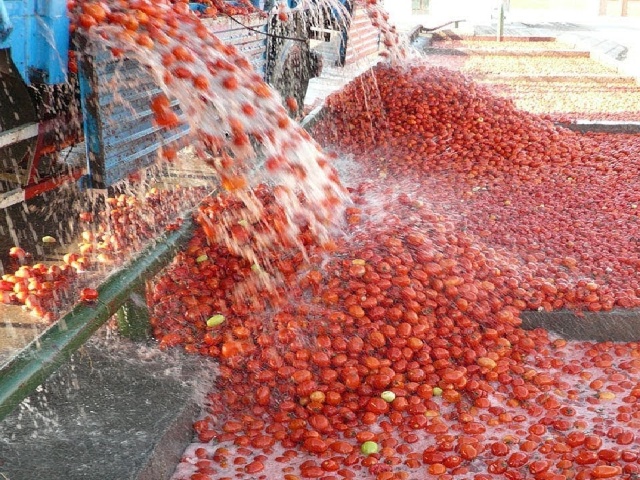
It all begins at the farm. Tomatoes are harvested at peak ripeness, often mechanically, to ensure optimal flavor and color. Upon arrival at the factory, they undergo rigorous inspection for quality, ripeness, and defects. They are then washed in flumes—water channels that gently convey them without bruising—to remove dirt and debris. Sorted by size and quality, the tomatoes are chopped or crushed into a pulp.
For efficiency, many factories start with tomato paste rather than fresh tomatoes. This paste is produced via the "Hot Break" method: pulped tomatoes are heated to about 200°F (90°C) to preserve natural pectin, aroma, and color, resulting in a high-solids concentrate. This step inactivates enzymes that could degrade texture, ensuring a thick base.
2. Pre-Cooking and Pulping
The chopped tomatoes or reconstituted paste are pre-cooked in large stainless-steel vats to soften them, eliminate bacteria, and begin breaking down the structure. This preserves the fruit and prepares it for pulping, where skins, seeds, and excess fiber are removed through screens or finishers, yielding a smooth puree. For Heinz, this puree is sterilized to kill microbes while retaining flavor, then concentrated by evaporating water to form a thick paste.
3. Mixing and Cooking
The puree or paste is transferred to massive cooking kettles or tanks, where other ingredients are added. Vinegar, sugar, salt, and spices are incorporated in precise amounts, often using high-shear mixers to ensure uniformity and prevent lumps. The mixture is heated to boiling, with careful timing to integrate flavors—spices might be added later to avoid over-evaporation. Cooking, inspired by traditional methods, dissolves solids, evaporates moisture for viscosity, and achieves a smooth consistency. Temperatures are controlled to prevent scorching or flavor loss, typically simmering for 20-30 minutes.
For thicker textures, high-pressure homogenization is applied, fibrillating fibrous strands to enhance water retention and gelling from pectin. This step is crucial for the sauce's pourable yet clingy nature.
4. Finishing and De-Aeration
Post-cooking, the ketchup goes through a finisher or mill to remove any remaining particles, ensuring silkiness. De-aeration follows, vacuum-removing air bubbles to prevent oxidation, discoloration, and bacterial growth. This extends shelf life without preservatives.
5. Cooling, Filling, and Packaging
The hot ketchup is cooled slightly to preserve flavor, then filled into sanitized containers at controlled temperatures—often 180-190°F for pasteurization. Bottles, typically high-density polyethylene or glass, are filled using automated machinery with vacuum seals for tamper-proofing. Containers are then cooled in water baths or air tunnels, labeled with nutritional info and batch codes, and packed for distribution.
Equipment Used in Ketchup Production
Modern ketchup factories rely on specialized machinery for efficiency and consistency. Flumes and conveyors handle initial washing and sorting. Stainless-steel vats and kettles are used for pre-cooking and main cooking, resistant to acidity. High-shear mixers, like batch or in-line models, are pivotal for blending— they disperse powders rapidly without agglomeration, reducing mixing time. For example, Ginhong's RX Vacuum Homogenizer combines blending, emulsifying, and homogenizing, ideal for varied textures.
Finishers and mills refine the product, while de-aerators use vacuum technology. Automated filling lines ensure precision, with sensors for quality checks. Red Gold employs high-shear mixers in stainless-steel kettles for blending. These tools minimize human error, scale production, and maintain hygiene.
Quality Control and Food Safety
Quality is non-negotiable in ketchup production. Raw materials are tested for purity and compliance. In-process sampling checks pH, viscosity, flavor, and microbial levels at stages like pre-mixing and post-cooking. Sensory panels evaluate taste, while equipment measures consistency.
Food safety adheres to FDA regulations, with pasteurization killing pathogens and pH below 4.0 preventing growth. Batch testing for toxins and allergens ensures safety. Heinz conducts supplier audits and final inspections. These measures guarantee a product that's safe, consistent, and delicious.
Variations and Modern Innovations
Ketchup isn't one-size-fits-all. Spicy versions add chili, while organic or low-sugar options cater to health trends. Regional adaptations include fruit-based ketchups in Asia. Innovations focus on sustainability: recyclable packaging and reduced water use in processing. Plant-based thickeners and natural flavors align with clean-label demands.
Packaging evolves too—from upside-down squeeze bottles to single-serve packets for convenience. Some factories experiment with high-pressure processing for fresher taste without heat.
Making Ketchup at Home
For a hands-on experience, homemade ketchup is simple. Start with 2 cups tomato puree, ½ cup vinegar, ¼ cup sugar, 1 tsp salt, and spices like onion powder and clove. Simmer for 20-30 minutes, cool, and store in the fridge for up to a month. This mirrors factory steps but on a small scale, allowing customization.
Conclusion
The making of tomato ketchup is a testament to human ingenuity, turning seasonal produce into a year-round essential. From ancient fish sauces to high-tech factories, its journey reflects culinary evolution. Whether produced by giants like Heinz or in your kitchen, the process emphasizes quality ingredients, precise blending, and rigorous safety. Next time you squeeze that bottle, remember the intricate dance of tomatoes, spices, and science behind it. Ketchup isn't just made—it's crafted with care for global enjoyment.